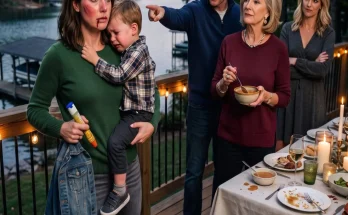
The day I inherited thirty-eight million dollars, I thought my son’s life was about to get easier. By sunset, I was lying beneath hospital lights with broken ribs, a fractured wrist, and a nurse standing beside my bed trying too hard not to look sorry for me.
My name is Evelyn Hart. I am sixty-eight years old, and until that bright Florida afternoon, I believed my life had become too ordinary for anything dramatic to happen to it. I lived in a quiet neighborhood outside Orlando, the kind of place where lawns are trimmed every Thursday, porch flags fade in the sun, and neighbors pretend not to watch each other through blinds while knowing exactly whose garbage cans stayed out too long. My house was small but paid for, with pale yellow siding, a screened porch, and a kitchen window that looked out toward a narrow strip of grass where the lizards liked to sun themselves. It was not a glamorous life, but it was steady, and after my husband died seven years earlier, steady felt like mercy.
I had one son, Mason, and for most of my life, loving him was the simplest thing I ever did. He had been the kind of child who reached for my hand without thinking, who slept with one arm around a stuffed dinosaur until he was nine, who cried when his father killed a spider because he said every living thing was probably scared of dying. I raised him to be gentle. At least, I thought I did. He grew into a handsome man with his father’s shoulders and my eyes, the sort of man who could look sincere even when he was avoiding something. When he married Khloe, I told myself I was gaining a daughter. She was polished, ambitious, always fragrant with expensive lotion and always just a little too quick to correct me. Still, Mason loved her, so I tried. Mothers do foolish things under the name of trying.
For years, Mason and Khloe spoke constantly about pressure. Their mortgage. The cost of daycare for their little boy, Aiden. Gas prices. Insurance. Khloe’s work stress. Mason’s commute. The way everything was expensive and nothing ever seemed to stretch far enough. I helped when I could. A few hundred here. Groceries when they were tight. A car repair. A preschool deposit they promised to repay and never mentioned again. I did not keep score because I thought family was not supposed to feel like accounting. That was before I learned that some people only avoid keeping score when someone else is always paying.
Then my aunt Margaret died.
Aunt Margaret was my mother’s older sister, and she had always lived like a woman trying not to leave footprints. She was private to the point of mystery, polite to the point of distance, and careful with money in ways I thought came from surviving hard years. She wore the same pearl earrings for twenty-five years, drove an old Buick long after she could have replaced it, and clipped coupons from the Sunday paper even when the grocery store app would have done the work for her. She lived in Winter Park in a white house shaded by oaks, with books stacked in every room and a silver tea service no one was allowed to touch unless she took it out herself. I loved her, though I never fully knew her.
When her attorney called, I assumed I was being summoned to collect small things. A bracelet. A box of family photos. Maybe instructions about her house. The office was on the second floor of a brick building near Park Avenue, with tall windows and a waiting room that smelled faintly of leather chairs and lemon oil. The attorney, Mr. Beckett, was a narrow man in a navy suit with kind eyes and the sort of calm voice that made even shocking information sound like a scheduled appointment.
“Mrs. Hart,” he said after I sat down, “your aunt was very clear about her wishes.”
I folded my hands in my lap and nodded. “I expected she would be.”
He slid a folder across the desk.
“Margaret left her estate to you.”
I opened my mouth to say something polite, something modest, but he kept speaking.
“That includes multiple investment accounts, several commercial properties, municipal bonds, private holdings, and the Winter Park residence. After taxes and administrative adjustments, the estimated value is approximately thirty-eight million dollars.”
For a moment, I thought I had misheard him. The recessed lights hummed softly above us. Somewhere outside, a car door shut. I stared at the folder, at my name printed on the first page, and felt as if I had been told that gravity no longer applied to me.
“Thirty-eight million?” I whispered.
“Yes, ma’am.”
Women like me do not expect numbers like that to enter their lives. I had spent years comparing grocery prices, saving rubber bands in the junk drawer, rinsing plastic takeout containers because they were still perfectly good, and moving money between accounts so every bill cleared in the right order. I knew the price of eggs, roof repairs, blood pressure medication, and the small humiliations of pretending you are “just browsing” when you cannot afford what you picked up. Thirty-eight million dollars did not feel like money. It felt like a language I had never learned.
And the first person I thought of was Mason.
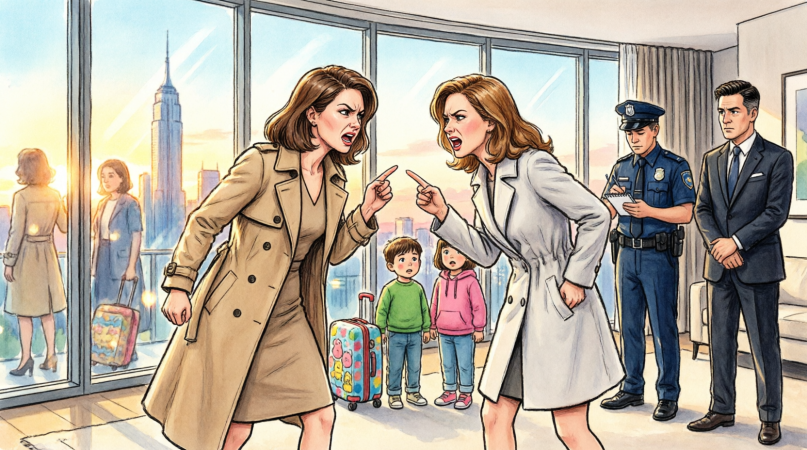
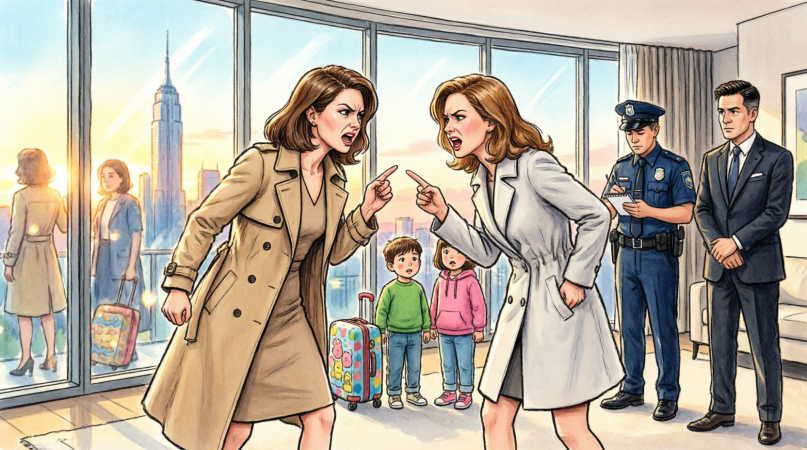
Not myself. Not travel. Not renovations. Not the comfort I could finally afford after years of making do. I thought of my son and his tired voice on the phone, of Khloe sighing about bills, of little Aiden needing a better school district someday. I thought, foolishly, that maybe this money could soften everything. Maybe Mason would stop sounding strained. Maybe Khloe would relax. Maybe there would be Sunday dinners without the invisible weight of needing something. Maybe, after all the years of being careful, I could finally be generous enough that no one had to ask.
I did not call first. I wanted to see Mason’s face. I wanted to tell him in person that everything was going to change. Mr. Beckett told me there was one final set of documents to sign later that afternoon, but I was restless, dizzy with the news, and his office needed time to prepare certified copies. So I told him I would be back before closing and walked out into Florida sunlight with the folder pressed against my chest.
I remember the sky being painfully blue.
I remember the heat rising from the pavement.
I remember getting into my car and thinking that Aunt Margaret, who had never wasted words, had somehow left me the loudest message of my life.
Then I started driving toward Mason’s house.
I never made it.
The crash happened six blocks from Mr. Beckett’s office. I had a green light. I remember checking both ways because I have always checked both ways, even when the law says the road belongs to me. Then a silver SUV shot through the intersection like it had been fired from a gun. There was no time to brake. No time to scream. Metal slammed into metal with a sound so violent it seemed to tear the afternoon open. Glass burst around me. My car spun. The world tilted. For one bright instant, I saw palm trees, dashboard, sky, airbag, and sunlight all mixed together, as if someone had thrown my life into the air.
Then nothing.
When I woke, everything was white.
White ceiling. White blanket. White bandage. White light pressing against my eyelids. A nurse was saying my name like she had already said it several times.
“Mrs. Hart. Evelyn. Can you hear me?”
I tried to answer and discovered that breathing hurt. My ribs screamed. My left arm was strapped in place. My head throbbed so deeply it seemed to pulse behind my eyes. The nurse told me I was at Orlando Regional. She told me I had been in an accident. She told me I was lucky.
Lucky meant fractured ribs, a broken wrist, a concussion, bruising along my shoulder and hip, and cuts from glass near my hairline. Lucky meant no surgery. Lucky meant I was alive.
I was still on the stretcher when I heard another nurse say they had called my emergency contact.
My son.
I closed my eyes in relief so immediate it almost hurt. Mason would come. Of course he would. Whatever distance had grown between us, whatever impatience had entered his voice these last few years, he would come. A child comes when his mother has been hit by a car. That was not hope. That was fact. Or I thought it was.
Twenty minutes passed. Then an hour. Then two.
A nurse named Denise came in to adjust my IV. She was kind in the direct, efficient way good nurses often are. Her dark hair was twisted into a bun, and her badge swung slightly as she moved. She checked my vitals, asked about my pain, and tried to smile when I asked if my son had called back.
Her face told me before her voice did.
“He said he wasn’t able to come right now,” she said carefully.
I blinked. “What?”
“He said he was tied up.”
“Tied up,” I repeated.
“I’m sorry.”
I stared at the wall. There had to be a misunderstanding. Maybe Mason was on the road. Maybe Aiden was sick. Maybe Khloe had the car. Maybe the nurse had spoken to him at a bad moment. My son had not been raised to be cruel. He used to call if I so much as sounded tired. He used to show up with soup when I caught a cold. He used to hug me in the kitchen while I was still wearing an apron from dinner and say, “You work too hard, Mom.”
“Did he sound worried?” I asked.
Denise looked down at the IV line.
That was answer enough.
Then she said something that changed the air in the room.
“He asked whether anyone else was listed to receive your assets if your condition worsened.”
At first, the words made no sense. They floated above me, sterile and impossible. Receive my assets. Condition worsened. My son’s mother had been pulled from a wrecked car, and he had asked about assets.
“He said that?” I whispered.
Denise looked stricken, as if she had realized too late she had stepped beyond professional caution.
“I’m sorry. I shouldn’t have—”
“No,” I said, though my chest hurt with the effort. “I’m glad you did.”
Because Mason did not know about the inheritance. Not the thirty-eight million. Not the trust documents. Not the properties. Not Aunt Margaret’s secret wealth. Nobody knew except Mr. Beckett and me. So if his mind went to assets before money had even entered the story, what had really changed in my son? And how long had I been too eager, too trusting, too maternal to see it?
Mason did not come that night.
He did not come the next morning.
When I called him myself, he answered on the fifth ring, voice rushed and irritated.
“Mom?”
“I’m in the hospital,” I said.
“I know. They called.”
There was noise behind him. A television. Khloe’s voice, faint. A child laughing.
“I was in a crash.”
“I know,” he repeated, as if the repetition itself were proof of concern. “Are you okay?”
“I’ve been better.”
A pause. “I’m in the middle of something right now.”
I looked at the ceiling.
“I see.”
“I mean, I can’t just drop everything. Khloe has a work thing, and Aiden’s schedule is crazy. The hospital said you were stable.”
Stable.
That word does a lot of work for people who do not want to show up.
“I could use some help when I’m discharged,” I said. It was difficult for me to ask. The words scratched on the way out.
He sighed.
Not heavily. Not cruelly. Just enough.
“I don’t have time for this right now, Mom.”
The line went quiet inside me.
Not the phone line. Me.
“Of course,” I said.
“I’ll call later.”
He did not.
When I was discharged two days later, Mr. Beckett arranged a car service because he had called the hospital after I missed my signing appointment and learned enough to be concerned. The Florida sun was hot on the pavement when I left, and the driver helped me into the back seat with a gentleness that made me want to cry. My pharmacy bag sat beside me. My wrist throbbed in its brace. Every bump in the road lit pain through my ribs……
I came home to the same house I had left, but it felt like a stage set after the actors had gone. Same paper plates in the pantry from a Costco pack. Same ceramic rooster on the counter that Mason always teased me about. Same family magnets on the fridge. Same faded photo of Mason at eight years old holding a fishing pole beside his father. The refrigerator hummed. The air conditioner clicked on. Somewhere outside, a lawn mower started.
Everything was familiar.
I was not.
I set the pharmacy bag on the counter, lowered myself carefully into a kitchen chair, and made one quiet decision.
I would not tell Mason about the inheritance.
Not yet. Not until I understood why he could hear that I had been in an accident and think first about what might be left behind. Not until I understood why the nurse’s words made something in me freeze. Not until I knew whether my son’s absence was selfishness, fear, or something darker.
Mr. Beckett came to my house the next afternoon with the documents. He did not comment on the bruise blooming along my collarbone or the way I moved like an old woman learning her body again. He sat across from me at the kitchen table, opened his leather briefcase, and explained everything slowly.
“Aunt Margaret anticipated complications,” he said.
That made me look up.
“What kind of complications?”
His eyes moved briefly to the family photo on the refrigerator. “The kind that often appear when money changes hands.”
I signed what needed signing, though he insisted I take breaks when my wrist hurt. The trust was clean. The assets were insulated. No one had access unless I gave it. No one could pressure me into a verbal promise. No one could claim authority. Aunt Margaret had built the estate like a fortress.
“She did not trust my family?” I asked softly.
Mr. Beckett chose his words carefully. “She trusted you.”
That was not the same answer.
Over the next two weeks, I recovered slowly. My ribs made sleep difficult. My wrist itched beneath the brace. My head ached if I read too long. Neighbors brought soup, flowers, gossip, and the kind of help that comes in short visits and foil-covered containers. Mason sent two texts.
Hope you’re healing.
Then, three days later: Let me know if you need anything.
I stared at that one for a long time.
I had needed him.
He had already answered.
The silence stretched. Then, on the fifteenth day after the crash, Mason called.
His voice was warm.
Too warm.
“Mom,” he said, “how are you feeling?”
I held the phone away from my ear for a second and stared at it. There are tones people use when they want to sound as if they have always cared. Mason had found that tone.
“I’m managing,” I said.
“Khloe and I want to come by.”
I looked toward the envelope of trust documents locked in my desk drawer.
“How kind.”
He missed the edge in my voice, or chose to.
“We’ve just been so worried. Things got crazy, but we want to see how you’re doing.”
“How thoughtful,” I said.
They arrived that Friday afternoon.
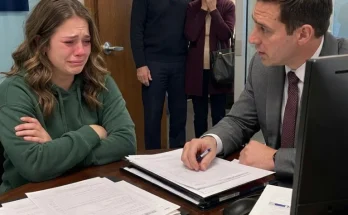
I heard their car before I saw it. A door shut outside. Footsteps on the walkway. The soft chime from my front camera on the hallway table. Mason walked in first after I unlocked the door. He was carrying flowers from a grocery store, the price sticker still half attached to the plastic. He tried to look warm, concerned, son-like. Khloe followed behind him in white pants, a pale green blouse, and oversized sunglasses she removed with one hand as she entered. Her hair was curled. Her lipstick was perfect. Her smile was soft enough to pass for kindness if you did not know how to look underneath.
“Evelyn,” she said, stepping forward as if she might hug me, then stopping when she saw my brace. “Oh, you poor thing.”
Poor thing. The words sounded like a label on a jar.
“I’m alive,” I said.
Mason kissed my cheek too lightly. “You look better than I expected.”
I almost asked what he expected, but I held the words back. I had learned in the hospital that silence could gather more than speech if you let it.
They followed me into the kitchen. I moved slowly, one hand resting on the counter for balance. Khloe’s eyes swept the room. I saw it. The quick inventory. The stack of mail. The prescription bottles. The folder Mr. Beckett had accidentally left visible near the fruit bowl before I moved it the previous day. Her gaze flicked toward the hallway, then back to me.
Then it happened.
Khloe looked at me fully, and all the color drained from her face.
Not concern. Not pity. Fear.
Her fingers tightened around her purse strap. Her lips parted. Her eyes moved across my face, down to my bruised shoulder, then toward the back door, then back to me. For one second, she looked less like my polished daughter-in-law and more like a woman who had walked into a room and found a ghost sitting at the table.
In a voice so thin it barely sounded human, she whispered, “Oh my God… she knew.”
Mason snapped his head toward her.
“What?”
Khloe blinked, as if she had not meant to speak aloud. “Nothing.”
But I had heard.
I stood with one hand on the kitchen counter, pain pulsing beneath my ribs, and felt the same cold stillness that had entered me when Denise told me what Mason had asked at the hospital.
“She knew what?” I asked.
Khloe forced a laugh. It broke halfway through.
“I said you look… you look good.”
“No,” I said. “You didn’t.”
Mason stepped forward. “Mom, she’s just emotional. The accident scared us.”
I looked at him then, at my son with flowers in his hand and panic beginning to gather behind his eyes.
“Did it?”
His face tightened. “Of course it did.”
“You didn’t come.”
“I explained that.”
“You said you didn’t have time.”
He flushed. “I was overwhelmed.”
“And you asked about my assets.”
The kitchen went completely still.
Khloe’s eyes darted to Mason.
Mason’s mouth opened. Closed.
“What?” he said.
“The nurse told me.”
“That’s not—” He stopped, regrouped. “That’s not what I meant. I was asking about paperwork. Hospitals need paperwork.”
“No,” I said. “Hospitals need emergency contacts. You asked who would receive my assets if I got worse.”
Khloe sat down without being invited.
That frightened me more than if she had argued.
I turned to her. “What did you mean when you said she knew?”
She stared at the table.
“Khloe.”
Mason’s voice turned sharp. “Mom, stop interrogating her.”
I almost laughed. There it was. The pivot. My pain was uncomfortable, so I became aggressive. Their fear entered the room, and somehow I became the danger.
The front doorbell rang.
Mason looked startled.
Khloe looked terrified.
I did not.
I had asked Mr. Beckett to come by at three.
“Excuse me,” I said.
I walked slowly to the door, each step pulling at my ribs. Mr. Beckett stood on the porch in a navy suit despite the heat, leather portfolio under his arm, expression composed. Behind him stood a woman I did not know—mid-forties, dark hair, beige blazer, investigator’s eyes.
“Mrs. Hart,” he said.
“Come in.”
Mason was standing when we returned to the kitchen.
“Who is this?” he demanded.
“My attorney,” I said. “Mr. Beckett. And?”
The woman stepped forward. “Angela Ruiz. Private investigator retained by Mr. Beckett’s office.”
Mason’s face shifted. “Investigator?”
Khloe covered her mouth with one hand.
Mr. Beckett glanced at her. “Mrs. Hart asked me to review the circumstances around her accident and certain family communications.”
“I did not—” Mason began.
Mr. Beckett lifted one hand, and somehow the room obeyed him.
“This is not a courtroom, Mr. Hart. I recommend you listen before deciding what to deny.”
Mason looked at me. For the first time in my adult life, I saw him not as my son, but as a man calculating whether his mother knew enough to be dangerous.
It broke my heart.
Quietly.
Angela opened a slim folder and placed three photographs on the table.
The first showed the intersection where I was hit.
The second showed a silver SUV from a traffic camera, blurred but recognizable.
The third showed the same SUV parked outside a body shop two towns away, front corner damaged.
Khloe made a sound.
Not loud.
Enough.
Mr. Beckett looked at her. “You recognize the vehicle?”…