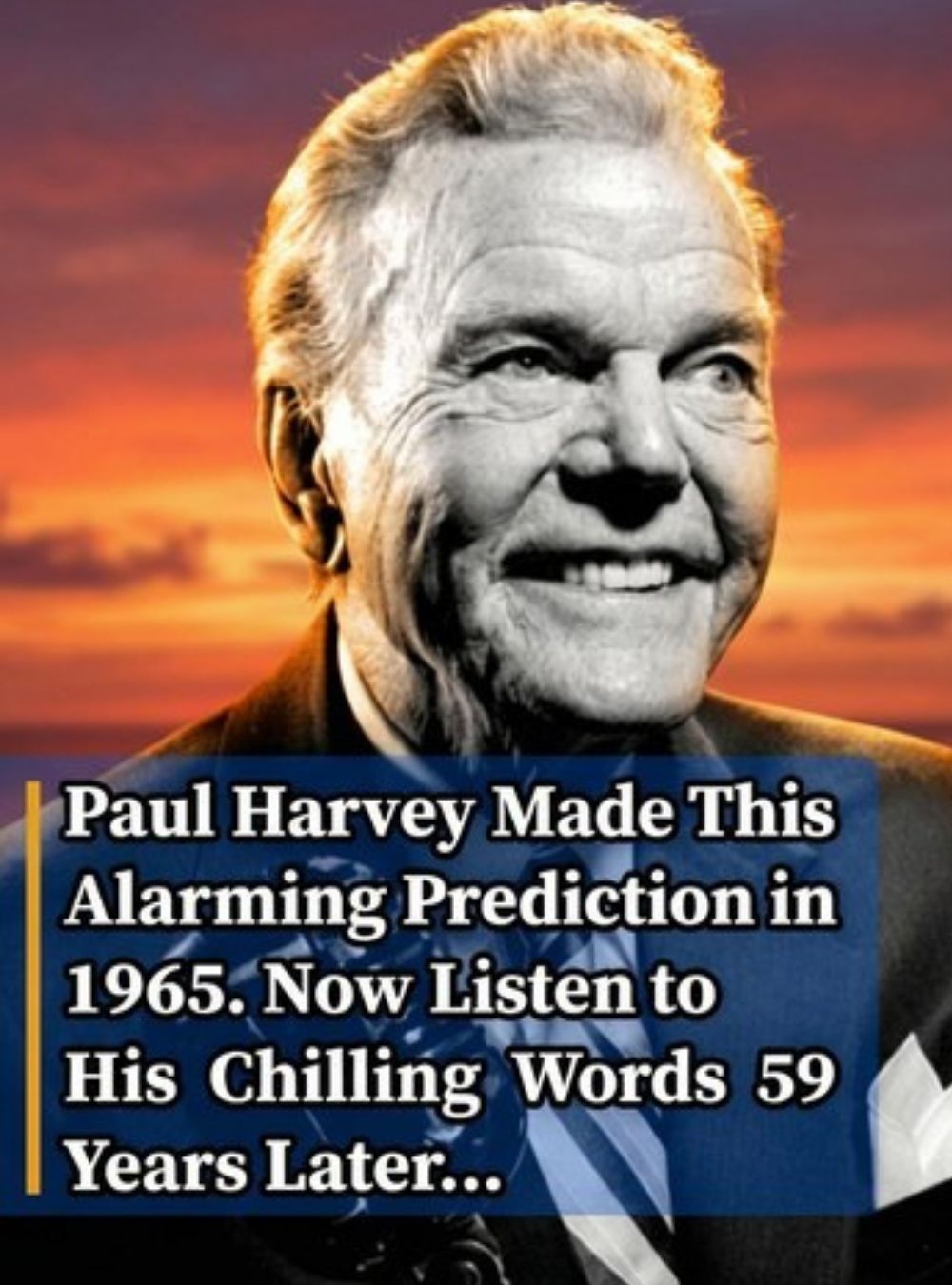

A brief radio commentary recorded in 1965 by broadcaster Paul Harvey has quietly resurfaced in modern conversation—not because it shocks or provokes, but because of how contemplative it feels today. Often associated with the phrase “If I Were the Devil,” the message is neither dramatic nor alarmist. Instead, it unfolds as a measured, imaginative reflection on human behavior and societal change. What once sounded like creative storytelling now feels like an invitation to pause and consider how values can shift gradually, often without anyone noticing until much later.
In the broadcast, Harvey relies on symbolism rather than prediction to convey his ideas. He presents change not as a sudden collapse, but as a slow, almost invisible process shaped by small compromises and everyday distractions. Reflection gives way to noise, responsibility yields to convenience, and comfort slowly becomes more attractive than character. At the time, this style of commentary was familiar to radio audiences and was meant to spark thoughtful discussion rather than fear, outrage, or division.
Decades later, the message resonates in a new and unexpected way. Modern listeners recognize themes that feel strikingly familiar—fragmented attention, weakened connections, and the ongoing challenge of maintaining purpose in a fast-moving world. Even though the commentary predates digital technology and social media, its observations about distraction and shifting priorities feel remarkably current. This relevance is what keeps the message alive, encouraging people to reflect on their own habits and choices rather than directing blame outward.
Paul Harvey’s enduring influence lies in his belief that meaningful change begins with individual awareness. His words continue to be shared not because they stir panic, but because they encourage balance, mindfulness, and responsibility. The message serves as a reminder that societies are shaped by everyday decisions—what we value, how we listen, and the principles we quietly uphold. Hearing it today feels less like a warning from the past and more like a gentle reminder that reflection and intention remain essential, no matter the era.