The Empty Plate at Thanksgiving
Part 1
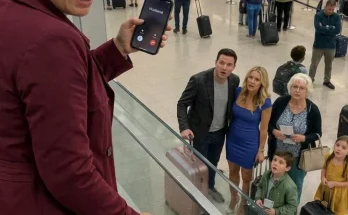
“Don’t give her a plate. She didn’t earn a seat at this table.”
My sister said it while my mother’s hand was hovering over a stack of dinner plates.
For one second, nobody moved.
Steam from the turkey clouded the kitchen windows. Butter hissed in a pan near the stove. From the living room, an announcer called the fourth quarter of the Thanksgiving game while my nephews argued over who had touched the remote.
Everything smelled warm.
Roasted sage. Brown sugar. Coffee.
But the room turned cold so quickly I felt it in my teeth.
My daughter, Lily, sat at the far end of the dining table with her hands folded in her lap. She was ten years old, small for her age, wearing the green cardigan my wife had bought her two weeks earlier.
She pulled the sleeves over her fingers.
That was what she did when she was trying not to cry.
My mother, Carol, looked from the plate to my sister.
“Dana,” she said quietly.
Dana leaned against the counter with a glass of wine in one hand.
“What? She didn’t help cook. She showed up late. The children who contributed eat first.”
“We were twelve minutes late because of the snow,” I said.
Dana shrugged.
“Actions have consequences.”
Lily’s cousins already had full plates. Turkey. Mashed potatoes. Rolls shining with butter. My sister’s youngest son had eaten half his macaroni and was pushing the rest into a pile with his fork.
Lily had nothing.
Not even water.
I looked at my mother.
She lowered her eyes.
My father remained in his chair, staring at the television through the doorway as if the football game required every part of his concentration.
Nobody told Dana to stop.
Nobody reached for a plate.
That silence did more damage than her sentence.
I touched Lily’s shoulder.
“Get your coat.”
My mother exhaled sharply.
“Marcus, don’t make a scene.”
I looked at her.
“I haven’t said anything.”
“That’s exactly what you’re doing.”
I had spent forty-two years learning my family’s language.
If Dana insulted someone, she was being honest.
If Mom defended her, she was keeping peace.
If I reacted, I was making a scene.
Lily slipped down from her chair.
Her sneakers made a faint squeak against the kitchen tile.
Dana took a sip of wine.
“Running away won’t teach her gratitude.”
I stopped beside her.
My hands felt strangely calm.
“What lesson were you trying to teach?”
“That family is earned.”
I looked around the kitchen.
At the refrigerator covered in my nephews’ drawings.
At the framed school photographs of every grandchild except Lily.
At the paper turkeys taped to the cabinets, each one labeled in my mother’s handwriting.
None carried my daughter’s name.
“Thank you,” I said.
Dana smiled.
She thought she had won.
“You finally understand.”
“I do.”
I helped Lily into her coat.
My mother followed us to the front door carrying a plastic container.
“At least take some food.”
I looked through the clear lid.
Two dry pieces of turkey. No sides. No dessert.
The scraps people packed after everyone else had chosen what they wanted.
“No.”
“Marcus, be reasonable.”
“I’m being very reasonable.”
My father finally appeared in the hallway.
“You’re going to tear this family apart over a plate?”
“No,” I said. “I’m leaving because you all decided the plate belonged to people who treated my daughter like family.”
His face hardened.
“Blood matters.”
Lily heard him.
I saw it in the way her shoulders folded inward.
She had come to us through foster care three years earlier. My wife, Elena, and I adopted her just before her eighth birthday.
She knew exactly what blood meant when adults used the word like a locked door.
I opened the front door.
Snow had begun falling over the street, soft and wet beneath the porch light.
Dana called from the kitchen.
“You’ll come back when you stop being dramatic.”
I didn’t answer.
At home, I made Lily a grilled cheese sandwich and tomato soup. She ate on the couch beneath a blue blanket while a cartoon played quietly.
After three bites, she looked at me.
“Was Aunt Dana right?”
“No.”
“I could have helped.”
“You weren’t asked to.”
“Maybe if I do more next time—”
“There won’t be a next time.”
She looked frightened.
Not relieved.
Children who have lost homes do not always hear boundaries as protection. Sometimes they hear another door closing.
I sat beside her.
“You didn’t lose anyone tonight,” I said. “They lost the right to treat you that way.”
She nodded, but I could tell she was not ready to believe me.
After Lily fell asleep, I went into my home office.
The clock on the desk read 11:48 p.m.
I opened my laptop and signed into the account labeled Family Reserve.
The balance was $186,442.17.
My parents’ mortgage, Dana’s rent, my brother’s truck, two utility accounts, and half a dozen smaller payments all came from that money.
I selected Manage Automatic Payments.
Before I clicked anything, an unfamiliar transaction caught my eye.
A withdrawal made three days earlier.
$24,000.
The description read:
L. Foster Placement Settlement.
And the authorization carried my mother’s name.
Part 2
My name is Marcus Reed.
I own a commercial heating and electrical company in Akron, Ohio. Twelve employees, four service vans, one receptionist who frightens late-paying contractors more effectively than any lawyer.
I started as an apprentice at nineteen.
By thirty, I had my master licenses.
By thirty-five, I had a company.
Nobody handed it to me.
I spent winters crawling beneath buildings where frozen pipes dripped down my neck. I missed birthdays because a nursing home lost heat. I drove through lake-effect snow to restart boilers for people who never asked how the technician got home.
Money came slowly.
Then it came steadily.
My family noticed.
At first, helping felt good.
Dad needed a new furnace after his second heart attack. I installed one at cost and paid my crew myself.
Mom fell behind on property taxes. I covered them.
Dana and her husband, Eric, lost their apartment after he changed jobs. I paid the deposit on another place.
My younger brother, Scott, broke his wrist and could not drive his delivery route. I covered three truck payments.
Each favor arrived with the same promise.
Just until we catch up.
Nobody caught up.
Instead, help became infrastructure.
I created the Family Reserve because midnight requests were exhausting. Mom and Dana received cards connected to the account for groceries and emergencies. Bills came out automatically.
I told myself the arrangement was efficient.
Elena called it dangerous.
“They’ve stopped asking whether they can afford things,” she told me one night. “They only ask whether you can.”
I defended them.
“They’re family.”
“So are we.”
At the time, Lily had lived with us for six months.
She was seven and still slept with her shoes beside the bed in case she needed to leave quickly.
Elena understood what I was too slow to see.
Family was not a word.
It was the place where vulnerability was safe.
Now I stared at the twenty-four-thousand-dollar withdrawal.
The bank’s transaction details showed that the money had been transferred to an account at Buckeye Community Trust.
The recipient name was partially hidden.
L. Reed Family Placement Fund.
Lily’s full legal name was Lily Grace Reed.
Before the adoption, her last name had been Mercer.
I clicked the authorization record.
My mother had used her debit credentials, but the transaction exceeded her normal limit. Someone had approved it through a verification call.
The bank listed the caller as Marcus Reed.
I had made no call.
My pulse began beating in my wrists.
I downloaded every record and froze both authorized cards.
Then I called the credit union’s emergency line.
The representative asked security questions.
Date of birth.
Last four digits.
Recent deposits.
“Did you authorize a transfer for twenty-four thousand dollars on Tuesday?” she asked.
“No.”
“Do you know a Carol Reed?”
“She’s my mother.”
“Mrs. Reed initiated the request online. A male caller completed voice verification.”
“Do you have the recording?”
“It can be retained for investigation.”
“Retain everything.”
The woman’s tone changed.
“Mr. Reed, the caller answered questions related to your business account and your daughter’s adoption.”
Cold moved through me.
“What questions?”
“I’m not permitted to disclose that until the fraud team reviews the call.”
“Was my daughter’s Social Security number used?”
A pause.
“Yes.”
I stood.
The office seemed too small.
Only Elena and I kept copies of Lily’s adoption documents. Our attorney had one set. The county had another.
My mother had never been given Lily’s Social Security number.
Unless she had found it in our house.
I walked to the locked cabinet where I kept family records.
The adoption folder was inside.
So was Lily’s birth certificate.
At first, everything appeared normal.
Then I noticed the staple holding the placement agreement.
It had been removed and replaced.
The original document had six pages.
Only five remained.
Page four was missing.
That page described a protected fund established after Lily’s biological mother died in a workplace accident.
The fund was not large enough to make her wealthy, but it was meant to support medical care and education.
I had almost forgotten it because we had never touched the money.
I called our adoption attorney, Miriam Cole.
She answered on the fifth ring, her voice thick with sleep.
“Marcus?”
“I’m sorry. I need to ask about Lily’s settlement fund.”
Silence.
“What happened?”
“Someone transferred twenty-four thousand dollars using her information.”
“That should be impossible.”
“My mother’s name is on the transaction.”
Another silence.
This one longer.
“Marcus, listen carefully. Do not confront anyone tonight.”
“Why?”
“Because your mother called my office last month.”
My grip tightened around the phone.
“What did she want?”
“She asked whether adoptive grandparents could access placement compensation if the adoptive parents became financially unstable.”
“I’m not financially unstable.”
“I told her that.”
“What else did she ask?”
Miriam lowered her voice.
“She asked what would happen to Lily’s trust if you and Elena lost custody.”
Part 3
I did not sleep.
At two in the morning, Dana called.
Her name flashed across my phone three times before I answered.
“What did you do?” she shouted.
“I came home.”
“Our rent payment disappeared.”
“Then pay your rent.”
“You promised to cover it through next summer.”
“I promised before you denied my daughter food.”
“She was not denied food. I said the kids who helped should eat first.”
“Every other child had a plate.”
“Because they’re part of the family.”
There it was.
Clearer than anything she had said at dinner.
I turned on the desk lamp and opened a blank document.
“I’m recording this call.”
Her breathing changed.
“You can’t do that.”
“Ohio permits it.”
“You’re threatening me now?”
“No. I’m documenting you.”
She lowered her voice.
“Mom said you would overreact.”
“How did Mom get Lily’s Social Security number?”
Silence.
Not confusion.
Calculation.
“What are you talking about?”
“Twenty-four thousand dollars left my account using Lily’s information.”
“I don’t know anything about that.”
“Did Mom ask you to help?”
“No.”
“Did Eric make a verification call pretending to be me?”
The line went quiet.
Then Dana laughed.
It sounded forced.
“You’ve lost your mind.”
“Did he?”
“Go to bed, Marcus.”
She ended the call.
At 7:15, I drove to the credit union.
The fraud manager, a woman named Rebecca Sloan, met me in a small office with no windows. She wore a navy blazer and kept her pen aligned perfectly with the edge of her notebook.
She played the verification recording.
A man’s voice answered the security questions.
It was not Eric.
It was my father.
He gave my date of birth.
My business tax number.
The month Lily’s adoption became final.
Then the bank representative asked why he was requesting the transfer.
“For placement reimbursement,” Dad said. “My wife and I have provided care that was never properly compensated.”
The representative asked whether he was Marcus Reed.
Dad said yes.
I closed my eyes.
My father’s voice had changed with age, but I would have recognized it inside a crowded stadium.
Rebecca stopped the recording.
“Do you wish to file a formal fraud claim?”
“Yes.”
“This may result in criminal referral.”
“I understand.”
“Are you certain?”
The question angered me.
Not because she asked.
Because part of me still hesitated.
He was my father.
The man who taught me to change a tire.
The man who attended my first licensing ceremony.
The man who had just impersonated me to take money connected to my daughter.
“Yes,” I said again.
Rebecca showed me the destination account.
It had been opened six weeks earlier by my mother and Dana.
The twenty-four thousand dollars was already gone.
Twelve thousand went to Dana’s landlord as an advance payment.
Seven thousand went to a car dealership.
The remainder was divided between a credit card and cash withdrawals.
The empty plate had not caused the fraud.
It had exposed people already stealing.
I called Elena from the parking lot.
She had spent Thanksgiving with her mother in Michigan, helping after a surgery. I had not told her about dinner the night before because I wanted her to sleep.
When I finished explaining, she said nothing for several seconds.
Then she asked, “Where is Lily?”
“At school.”
“Take her out.”
“You think she’s in danger?”
“I think adults discussing how to remove her from our custody should not know where she is.”
The fear in her voice turned my stomach.
I picked Lily up before lunch.
She climbed into the truck carrying her fox-shaped backpack.
“Am I in trouble?”
“No.”
“Did Grandma call the school?”
I looked at her.
“Why would you ask that?”
She stared down at the zipper on her bag.
“Grandma came last Tuesday.”
The parking lot seemed to tilt.
“What?”
“She said you knew.”
“Where did she take you?”
“She didn’t take me anywhere. She talked to me in the office.”
“What did she say?”
Lily’s fingers tightened around the zipper.
“She asked whether I was happy at home.”
I kept my voice careful.
“What else?”
“She asked if you and Mom fought. She asked if you ever left me alone. She said some children get adopted by people who only want money.”
I could hear my heartbeat.
“Did she tell you not to tell us?”
Lily nodded.
“She said you would get mad and send her away.”
I drove directly back to the school.
The principal pulled the visitor log.
My mother had signed in as Lily’s court-appointed advocate.
Beside her signature was a copy of an official-looking authorization.
The name of the issuing agency was correct.
The seal was not.
And at the bottom of the forged letter was the signature of Lily’s former social worker, a woman who had died eight months earlier.
Part 4
The school called the police.
I called Miriam.
Then I called Elena again and told her to come home.
The principal apologized so many times that the words stopped meaning anything. She showed me security footage of Mom entering the building in a beige coat, carrying a leather folder.
She looked confident.
That was what disturbed me most.
Not nervous.
Not guilty.
Prepared.
A secretary offered her coffee.
A counselor walked Lily into the conference room.
For twenty-three minutes, my mother questioned my daughter behind a closed door.
The school had believed she was authorized.
The forged document had been good enough to fool people who wanted it to be real.
Police took copies.
The fraud claim expanded.
Miriam contacted the county.
By late afternoon, we learned someone had submitted an anonymous report to child protective services accusing Elena and me of financial exploitation, emotional neglect, and leaving Lily unsupervised around electrical equipment.
The report was filed two days after I refused to co-sign Dana’s new SUV.
Its language sounded professional.
Specific.
It mentioned the settlement fund.
Miriam read portions over the phone.
“The caller claimed you adopted Lily to gain access to compensation.”
“We have never withdrawn a dollar.”
“I know.”
“Who filed it?”
“Anonymous reports are protected, but the timing matters.”
I thought of Mom asking Lily whether we fought.
I thought of Dad’s voice impersonating me.
This was no longer a family argument.
It was an attempt to build a case.
The goal was not merely money.
It was custody.
When Elena arrived that evening, she knelt in the entryway and held Lily for a long time.
Lily whispered something into her shoulder.
Elena looked at me over our daughter’s head.
There was fear in her eyes.
And fury.
After Lily went to bed, Elena placed her phone on the kitchen table.
“My mother kept screenshots,” she said.
“Of what?”
“Messages Carol sent her.”
My mother had contacted Elena’s mother, Ruth, several times over the previous month.
The messages began innocently.
Concern about Lily’s adjustment.
Questions about whether Elena seemed tired.
Then they became more direct.
Do you think Marcus and Elena took on too much?
Has Lily ever said she wants another home?
Would you support temporary family placement if they had marital problems?
Ruth had found the questions strange and stopped responding.
Mom continued anyway.
She wrote that Dana had room for another child.
I read that sentence twice.
Dana’s apartment had three bedrooms, but two were already occupied by her sons. She complained constantly about money. She had never offered to babysit Lily for more than an hour.
Why would she want custody?
Then Elena showed me the last screenshot.
Mom had written:
Once placement changes, the monthly support and Mercer trust can be redirected to the responsible household.
There it was.
Not concern.
Revenue.
Elena sat across from me, both hands wrapped around a mug she had not touched.
“You paid their bills while they tried to take our child.”
“I know.”
“You gave them cards.”
“I know.”
“You defended them every time I told you something was wrong.”
“I know.”
Her eyes filled.
“I need you to understand that ‘I know’ does not fix this.”
“I do.”
“No, Marcus. You keep looking like the man who will still find an explanation that lets them remain your family.”
The sentence hurt because it was true.
Some part of me still wanted Dad to say he had been confused.
Mom to say Dana manipulated her.
Dana to say the account was supposed to be repaid.
I wanted one person to be less guilty so I would not have to bury all of them at once.
Elena pushed her phone toward me.
“Your mother sent this an hour ago.”
It was a family group message.
Marcus has become unstable and is withholding essential support. We are worried about Lily and believe she may be unsafe while he is angry.
Replies followed.
Aunt Patricia: Should someone call the county?
Scott: Marcus has been stressed about money.
Dana: I’m scared for my niece.
The same people who left Lily without a plate were now performing concern for her safety.
I took screenshots.
Then I typed one message.
All future contact regarding Lily must go through our attorney. Do not come to our home, her school, or my workplace.
Mom replied immediately.
You cannot keep our granddaughter from us.
I wrote:
You called her an outsider until her trust became useful.
Three dots appeared.
Then disappeared.
No response came.
At midnight, the doorbell camera alerted me.
A car had stopped across the street.
Its headlights remained off.
I zoomed in.
My brother Scott sat behind the wheel.
A second person moved in the passenger seat.
When the interior light came on, I saw Dana holding a camera aimed at our house.
Part 5
I stepped onto the porch with my phone recording.
Scott started the engine.
The car did not move.
“What are you doing?” I called.
Dana lowered the camera.
“We’re checking on Lily.”
“At midnight?”
“We heard yelling.”
“No, you didn’t.”
Scott opened his door but remained seated.
“Mom said Elena came home angry.”
“Elena lives here.”
“You’ve been acting crazy.”
“Because Dad committed bank fraud?”
His face changed.
Dana leaned toward him.
“Don’t talk to him.”
I walked to the end of the driveway.
Snow crackled beneath my shoes.
“Leave.”
“We have every right to make sure our niece is safe,” Dana said.
“You denied her dinner.”
“That was discipline.”
“For what?”
“She needs to learn she can’t just enter a family and expect everyone to rearrange around her.”
My hand tightened around the phone.
“Say that again.”
She saw the screen.
“You’re recording?”
“Yes.”
Dana opened her door.
Scott grabbed her sleeve.
“Get back in.”
She pulled free.
“You think because you have money you can control everybody.”
“No. I’m learning the opposite.”
“You cut off Mom’s mortgage.”
“I stopped paying a debt that is not mine.”
“You stopped our rent.”
“Your husband works.”
“You know his hours were reduced.”
“You bought a twelve-thousand-dollar SUV deposit with money taken using Lily’s identity.”
Her face went pale.
Scott looked at her.
“You said Mom transferred it from Marcus’s family account.”
“She did.”
“Using my name,” I said.
Scott turned toward me.
“Dad said you approved it.”
“Dad impersonated me on a recorded bank call.”
The silence shifted.
For the first time, Scott looked uncertain.
Dana did not.
“Dad would never do that unless he had a reason.”
The sentence settled everything.
Not Did he?
Not That cannot be true.
He must have had a reason.
I pointed toward the street.
“Leave before the police arrive.”
“You called them?”
“I called them when your car stopped.”
Scott pulled Dana back inside.
As they drove away, she lowered the window.
“You’re going to regret choosing her over your real family.”
The words carried clearly through the cold.
My phone captured every one.
The next morning, I met Miriam and a family-law attorney named Samuel Price.
Samuel had kind eyes and the blunt manner of someone who billed by the hour and did not waste either his time or yours.
“You need temporary protective orders,” he said.
“Against my parents and siblings?”
“Against anyone participating in harassment, fraudulent school access, or attempts to manufacture a custody case.”
He reviewed the recordings, messages, bank documents, and school footage.
Then he asked about the original foster placement.
“Did Lily’s biological relatives contest the adoption?”
“No.”
“Any surviving relatives?”
“Her maternal uncle, but he signed consent. He lives in Oregon.”
“Has your family contacted him?”
I did not know.
Samuel called the uncle’s attorney.
An hour later, we had an answer.
My mother had contacted him twice.
She told him Lily had been placed in an unsafe home.
She offered to pay his travel expenses if he would petition to reopen the case.
My stomach turned.
“What did he say?”
“He refused,” Samuel said. “But he kept the emails.”
Mom had attached photographs to support her claims.
One showed Lily crying in our backyard.
I recognized the day.
She had fallen from a swing and scraped her knee.
Another showed Elena holding a glass of wine at a wedding.
The image had been cropped to remove the bride and guests.
A third showed Lily sitting alone in my work van.
She had been waiting for me while I carried supplies into our locked garage. I had been away from her for less than two minutes.
Each photo was real.
Together, they told a lie.
“Who took them?” Elena asked.
The backyard photograph had been taken from my parents’ property during a summer cookout.
The wedding photo came from Dana.
The van photograph had been taken outside my business.
Someone had been collecting material for months.
Samuel leaned back.
“This is coordinated.”
“Because I refused to co-sign a car?”
“No.”
He pointed to the timeline.
“The custody report predates that refusal.”
He was right.
The anonymous complaint had been prepared before the argument about the SUV.
Thanksgiving was not the start.
Neither was the trust transfer.
Something earlier had triggered the plan.
Miriam reviewed the adoption records again.
Then she called me that evening.
“Marcus, I found an amendment filed six months after Lily’s adoption.”
“What kind of amendment?”
“It changes the successor custodian of her trust if you and Elena become unable to serve.”
“To whom?”
“Carol Reed.”
“My mother?”
“Yes.”
“We never agreed to that.”
“I know.”
“Whose signatures are on it?”
“Yours and Elena’s.”
We had signed no amendment.
Miriam’s voice grew quieter.
“There is also a witness signature.”
“Who?”
“Dana.”
Part 6
The forged trust amendment had been notarized by my father.
Dad was not a notary.
The stamp number belonged to a retired woman in Canton who died two years before the document was created.
Every new fact made the scheme look less like panic and more like a business plan.
Samuel filed emergency motions.
The court temporarily barred my parents, Dana, Eric, and Scott from contacting Lily, visiting her school, or approaching our home.
Mom reacted online.
She posted a photograph of herself holding Lily on adoption day.
The caption read:
A grandmother’s love should never be treated like a crime.
She did not mention the bank transfer.
The forged documents.
The school visit.
Within an hour, relatives were sharing it.
Comments accused Elena of isolating me.
Someone wrote that adopted children needed “their whole family.”
Another said money had changed me.
I wanted to answer every one.
Samuel told me not to.
“People who are building a false story love public arguments,” he said. “You give them sentences they can crop.”
So I stayed quiet.
Silence felt different now.
Before, it had protected them.
This time, it protected evidence.
The bank restored the twenty-four thousand dollars provisionally while investigating. I moved it immediately into a restricted account for Lily.
Then I dismantled the Family Reserve.
Mom’s utilities.
Dad’s second mortgage.
Dana’s rent.
Scott’s truck insurance.
Streaming services.
Phone lines.
Everything stopped.
I transferred one hundred thousand dollars into Lily’s education account.
Another fifty thousand went into a protected future fund requiring both Elena’s and my approval.
The remaining money moved into my company reserve.
When I clicked confirm, my hands did not shake.
I was not taking anything from them.
I was returning money to the people it had always belonged to.
My household.
My employees.
My daughter.
The calls began within minutes.
Dad left a message.
“You have seventy-two hours to restore the mortgage payment.”
Dana sent a payment request for rent with the note:
You’re hurting your nephews.
Scott wrote:
I hope you’re proud when Mom loses the house.
Mom called from an unknown number.
I answered because Samuel had advised us to preserve direct threats.
Her voice sounded small.
“Marcus, what are you doing?”
“Separating our finances.”
“You can’t.”
“I already did.”
“We depend on you.”
“That was your choice.”
“You created that arrangement.”
“I created support. You converted it into entitlement.”
She began crying.
“Dana made one stupid comment.”
“This is not about Thanksgiving.”
“Then what is it about?”
“Tell me.”
Silence.
I continued.
“Why did you forge a trust amendment? Why did Dad impersonate me? Why did you question Lily at school?”
“I was trying to protect her.”
“From what?”
“You and Elena have problems.”
“What problems?”
“You work too much.”
“So your solution was to take her money?”
“That money should support the people doing the real work.”
“What real work?”
“Accepting her.”
I went completely still.
Mom realized too late what she had said.
“Marcus, that came out wrong.”
“No. It came out clean.”
“We opened our family to her.”
“You left her without a plate.”
“She has behavioral issues.”
“Name one.”
“She’s withdrawn.”
“Because you exclude her.”
“She doesn’t bond normally.”
“She bonded with us.”
“Because you spoil her.”
Every answer revealed another layer.
Mom did not believe Lily was family.
She believed accepting her was labor deserving compensation.
I asked the question that had been growing since Miriam mentioned the custody amendment.
“When did you decide to take her?”
Mom’s breathing changed.
“I never said that.”
“When?”
“She would have been better with people who understand extended family.”
“Dana?”
“She has children.”
“So do I.”
“She has biological children.”
The words came softly.
Almost tenderly.
That made them worse.
I ended the call.
The next court hearing took place four days later.
My family arrived together.
Mom wore gray.
Dad wore the suit from my wedding.
Dana sat between them holding a folder.
Their attorney argued that the dispute was a misunderstanding caused by my emotional reaction to a holiday disagreement.
Then Dana’s folder was introduced.
Inside were photographs, school records, and a handwritten journal supposedly kept by Lily.
The journal described fear, hunger, and being locked alone in rooms.
I knew immediately it was fake.
Not because of the stories.
Because every page was written in blue cursive.
Lily printed in block letters.
And she had never learned cursive.
Part 7
The judge noticed before our attorney said anything.
“Who produced this journal?” she asked.
Dana raised her hand.
“I found it in Lily’s backpack.”
“When?”
“Two weeks ago.”
Lily had not been near Dana for more than a month.
Samuel requested the original backpack and chain of custody.
Dana’s attorney whispered to her.
Her face tightened.
The judge examined one page.
“Mrs. Coleman, why does the child refer to her father as Marcus?”
Dana blinked.
“I don’t know.”
“She calls him Dad in school records, therapy records, and every verified statement before the court.”
Dana looked at Mom.
Mom stared straight ahead.
The judge ordered the journal submitted for forensic examination.
Then Samuel introduced the recording from Thanksgiving.
Dana’s voice filled the courtroom.
Don’t give her a plate. She didn’t earn a seat at this table.
The judge’s expression changed.
Next came the midnight recording.
You’re going to regret choosing her over your real family.
Dana closed her eyes.
Mom began crying.
Dad stared at the table.
Their public story had depended on the belief that cruelty left no paperwork.
They had forgotten my phone did not share their loyalty.
The temporary protection order remained in place.
The court also referred the forged journal and trust amendment to investigators.
Outside the courthouse, reporters waited.
Someone had contacted a local station.
Mom covered her face and accused me of humiliating her.
“You made this public,” she said.
“I filed in a closed family court.”
“Then who called the news?”
She looked toward Dana.
Dana looked toward Scott.
For the first time, I saw fractures between them.
They had coordinated the plan.
They had not coordinated the collapse.
That afternoon, Scott came to my business alone.
He stood near the service counter twisting his truck keys around one finger.
My receptionist watched him as if he might steal the stapler.
“Can we talk?” he asked.
We went into my office.
He closed the door.
“I didn’t know about the journal.”
“Did you know about the trust?”
“Not at first.”
“When did you learn?”
“September.”
Two months before Thanksgiving.
“What were you told?”
“That Mom was trying to make sure Lily’s money stayed in the family.”
“It was already in my family.”
“You know what she meant.”
“I want to hear you say it.”
He looked away.
“Blood family.”
I sat behind my desk.
“What did you do?”
“I watched the house a few times.”
“I know.”
“I took pictures.”
“Why?”
“Mom said she needed proof Lily was left alone.”
“Did you ever see that?”
“No.”
“Did you still give her the pictures?”
“Yes.”
He rubbed his face.
“She said if Dana got temporary custody, the trust could help all the kids.”
“All the kids except Lily.”
“She said Lily would still be taken care of.”
“Like Thanksgiving?”
Scott winced.
“I’m sorry.”
I believed he felt bad.
That was not the same as innocence.
“Why are you here?”
“Dad wants me to sign a statement saying you threatened us.”
“Did I?”
“No.”
“Then don’t sign.”
“He says they’ll stop helping with my truck.”
“I paid for the insurance.”
“Not anymore.”
“That is not leverage. That is adulthood.”
His mouth tightened.
“You don’t have to act superior.”
“I’m not superior. I’m simply no longer financing the argument against me.”
He stood.
At the door, he stopped.
“There’s something you don’t know.”
I waited.
“The trust isn’t the only reason Mom wanted custody.”
“What else?”
Scott looked toward the lobby.
Then he lowered his voice.
“Lily’s biological mother left land.”
I stared at him.
“What land?”
“I don’t know. Mom found out last year.”
“How?”
“She got a call from an attorney looking for Lily.”
No attorney had contacted us.
Scott continued.
“Mom told him she was Lily’s guardian.”
My hands went cold.
“What happened next?”
“She started getting letters.”
“Where are they?”
“At Mom and Dad’s house.”
“Why would she hide them?”
“Because the land sits near a new distribution project.”
The pattern felt familiar.
Money.
Property.
A child treated as an obstacle between adults and assets.
“How much is it worth?”
Scott swallowed.
“Dad said maybe two million.”
Part 8
Miriam confirmed it the next morning.
Lily’s biological grandfather had owned ninety acres in southern Ohio. After his death, the property passed through probate. Lily’s mother inherited a share, but the title remained unresolved when she died.
A logistics company later announced plans for a warehouse complex nearby.
The land’s value increased dramatically.
An estate attorney had tried to locate Lily’s guardian.
He found my mother because she had registered herself as an interested relative using information from the adoption announcement.
Mom told him she had legal custody.
She received preliminary documents.
Then she stopped responding.
“Why didn’t the attorney find us?” I asked.
“He relied on the information she gave him,” Miriam said. “He believed you had lost custody.”
“Based on what?”
“She sent a copy of the forged trust amendment and the anonymous welfare complaint.”
Every lie supported the next.
Mom could not sell Lily’s interest without legal authority.
But if Dana gained custody—or even temporary control as successor custodian—she could influence the estate.
Two million dollars had been waiting behind the empty plate.
Suddenly the timing made sense.
The Thanksgiving insult was not random.
Dana was testing a story.
Lily was ungrateful.
Lily did not participate.
Lily did not belong.
If we objected, I was unstable.
If I withdrew money, I was financially abusive.
If I kept Lily away, I was isolating her.
They had prepared both outcomes.
The only thing they had not expected was the bank recording.
We obtained a search order for documents related to the estate.
Investigators went to my parents’ house.
Mom tried to hand them one folder and claim it contained everything.
A detective noticed the basement furnace closet had a new lock.
Inside, they found three boxes.
Estate letters.
Copies of Lily’s school records.
Photographs of our house.
Draft custody petitions.
A budget showing how the family planned to divide Lily’s trust income.
Dana had written numbers in red pen.
Rent: $15,000 annually.
Mom and Dad support: $12,000.
Scott truck/business: $9,000.
Family vacation: $8,000.
Lily personal expenses: $4,500.
My daughter had the smallest line in a budget funded by her life.
At the bottom was a note.
Once land sells, clear all debts.
The handwriting belonged to my father.
Elena sat beside me while Samuel read the inventory.
She did not cry.
She looked beyond anger.
“They budgeted her,” she said.
“Yes.”
“Like equipment.”
I thought about my company vans.
Every one had a larger maintenance allowance than they planned to spend on Lily.
The police arrested Dad for identity fraud and document forgery.
Mom was charged later that day.
Dana was questioned regarding the false journal, bank account, and custody documents.
Scott agreed to cooperate before charges were filed.
Eric claimed he knew nothing, though records showed his car deposit came from the stolen transfer.
When the news reached relatives, the family group chat changed direction.
People who called me cruel now wanted details.
Aunt Patricia wrote:
We had no idea.
I replied once.
You saw a child denied food and said nothing. You knew enough.
Then I left the group.
Two days later, Dana appeared at our front gate.
The protective order prevented her from approaching, so she stood across the street holding a cardboard sign.
PLEASE LET ME SEE MY BROTHER.
A local reporter arrived twenty minutes later.
Dana cried on camera.
She said Mom had manipulated her.
She claimed the empty plate comment was a joke taken out of context.
She described herself as another victim.
Then the reporter asked whether she had written the budget found in the basement.
Dana stopped crying.
The interview ended.
That evening, she sent an email through her attorney.
She offered to testify against our parents if I asked prosecutors for leniency on her behalf.
The last line read:
I know I made mistakes, but you cannot destroy your nephews’ mother.
I gave the email to Samuel.
“Will you help her?” he asked.
“No.”
Not because I wanted revenge.
Because she still believed her children made her choices my responsibility.
The estate attorney arranged a meeting about Lily’s land interest.
He brought original documents and an old envelope addressed to her.
The handwriting belonged to Lily’s biological mother.
Inside was a letter meant to be opened when Lily turned eighteen.
At the top, her mother had written:
If the Reeds ever tell you that I gave you away, they are lying.
Part 9
The letter was six pages long.
Lily’s mother, Hannah Mercer, had written it during her final year of life.
She knew she worked a dangerous job at an industrial plant. She knew the company’s safety failures had already caused injuries. She did not know she would die.
The letter was not a goodbye.
It was protection written in advance.
Hannah described my mother.
Carol was a distant cousin through marriage. She had offered to help when Hannah struggled with childcare.
According to the letter, Mom became interested in Lily only after learning about the workplace claim and family land.
Hannah wrote:
Carol keeps asking whether I have made plans for Lily. She says children need stable families, but every question comes back to money.
My stomach turned.
Mom’s interest in Lily began before foster care.
Before the adoption.
Before Hannah died.
Another paragraph was worse.
If something happens to me, do not let Carol Reed manage anything. She sees people as obligations until she finds a way to make them useful.
Elena read that line aloud.
Then she covered her mouth.
Hannah had seen my mother clearly after knowing her for months.
I had spent a lifetime refusing to.
The estate attorney explained that Hannah had named another caregiver, but the woman developed a serious illness and could not take Lily. The foster system became involved.
Our adoption had occurred through normal legal channels.
Mom did not arrange it.
But after learning Elena and I were applying to adopt, she encouraged us.
I remembered her enthusiasm.
You two have the space.
It would be good for you.
Family should step up.
I thought she had seen Lily as family.
Now I wondered whether she had simply moved the asset closer.
The letter remained sealed until the estate issue resurfaced. Mom had intercepted the notice before anyone could give it to us.
We did not show Lily the full letter.
She was ten.
She deserved truth in portions she could carry.
Elena and I sat with her therapist and explained that her birth mother had loved her, planned for her, and left something meant to protect her future.
Lily listened quietly.
“Did Grandma know my first mom?” she asked.
“Yes.”
“Did she like her?”
I did not know how to answer without lying.
“Grandma wanted things that belonged to her.”
Lily looked at the floor.
“Like me?”
The question broke something inside me.
I moved from my chair and knelt in front of her.
“You do not belong to adults like an object.”
“But she wanted me because of the money.”
“She wanted control. That is not the same as wanting you.”
“Did you want me?”
Elena answered before I could.
“We wanted you before we knew any money existed.”
Lily’s face crumpled.
She climbed into Elena’s lap even though she was getting too big for it.
We held her until she stopped shaking.
That night, I walked through our house checking doors and windows.
Not because I expected danger.
Because guilt needed motion.
Elena found me in the kitchen.
“You didn’t create your mother,” she said.
“I funded her.”
“You thought you were helping.”
“I ignored what help was turning into.”
“You stopped.”
“After Lily sat without a plate.”
Elena leaned against the counter.
“Yes.”
There was no gentle lie in her answer.
I appreciated that.
We did not need to pretend I had responded early.
We needed to make sure I never responded late again.
The court appointed an independent trustee for Lily’s assets.
The land would not be sold until full valuation and environmental review. Any proceeds would remain protected for her future.
No relative could access them.
Not even us without court approval.
That brought relief.
Then the criminal case revealed another surprise.
Investigators searched Dana’s phone.
They found messages between her and Mom from the morning of Thanksgiving.
Mom wrote:
Make sure Marcus reacts in front of everyone.
Dana replied:
What should I say?
Mom answered:
Something about Lily not contributing. If he takes her away, we say he isolates her whenever we set boundaries.
Dana wrote:
And if he stays?
Mom replied:
Then Lily learns where she belongs.
The empty plate had been planned.
My daughter’s humiliation was evidence they intended to create.
At the bottom of the thread, sent thirty minutes before we arrived, Dad had written:
Do not take it too far. We still need his money until the petition is ready.
Part 10
I read the message in Samuel’s office.
Then I read it again.
Do not take it too far.
Dad knew.
Not only about the bank transfer or the forged trust.
He knew they planned to hurt Lily at Thanksgiving.
His objection was practical.
Do not drive away the money too soon.
For weeks, I had imagined him as weak.
A man dominated by Mom.
Someone who followed because confrontation tired him.
That message removed the last excuse.
He was not passive.
He was invested.
Samuel watched me carefully.
“Are you all right?”
“No.”
“That may be the correct answer.”
I looked through the conference-room window at people crossing the parking lot in winter coats.
“What happens now?”
“The prosecution has enough to expand the conspiracy charges.”
“Will the Thanksgiving messages matter legally?”
“They establish coordination and motive.”
“They used a child as bait.”
“Yes.”
I wanted to break something.
Instead, I went home and fixed the loose cabinet hinge in Lily’s room.
The screw had stripped from the wood. I filled the hole, let it set, and drove the screw again.
Small repairs made sense.
Damage.
Support.
Pressure applied carefully.
Trust was more complicated.
The family began negotiating plea agreements.
Scott received immunity for full cooperation regarding surveillance and document access. He admitted entering my office during a summer cookout to photograph adoption records.
He had given Mom Lily’s Social Security number.
He said he thought it was for an insurance form.
Maybe that was true.
It did not restore him.
Eric admitted making cash withdrawals from the fraudulent account. He claimed Dana told him I approved them.
Dana denied writing the fake journal, though forensic analysis matched her handwriting and found her fingerprints beneath the cover.
Mom blamed Dad.
Dad blamed Mom.
Their marriage of forty-five years dissolved into competing statements.
Each told investigators the other designed the plan.
The evidence showed both participated.
When Mom learned Dad had described her as controlling, she disclosed his hidden gambling account.
When Dad learned she had done that, he revealed she had contacted the estate attorney under a false name.
They had protected each other only while protection remained profitable.
Dana’s attorney requested a family mediation.
Samuel asked whether I wanted to attend.
“No.”
“She says she wants to apologize directly.”
“She can write a statement for the court.”
“She says this is about more than the charges.”
“It always is when consequences arrive.”
I did agree to meet my parents once, in a controlled room at the courthouse, because they claimed to have information about other assets belonging to Lily.
Mom entered first.
Without makeup, she looked smaller. Her gray hair had grown at the roots. She smiled as though we were meeting for lunch.
“Marcus.”
I said nothing.
Dad sat beside her.
He did not meet my eyes.
Their attorney explained they would provide full information if I submitted a letter supporting noncustodial sentences.
“What information?” I asked.
Mom folded her hands.
“Hannah had another account.”
“Where?”
“We need assurance first.”
I stood.
“Marcus,” Dad said.
I stopped.
He finally looked at me.
“We are still your parents.”
“No.”
Mom flinched.
“You don’t mean that.”
“I mean the legal fact. You are the people who raised me. You are not people I will treat as family again.”
Her eyes filled.
“We made mistakes.”
“You planned an empty chair for my daughter so you could call me unstable when I defended her.”
“That was Dana.”
“You discussed it.”
“I didn’t know she would say it like that.”
“You wrote the instructions.”
Mom’s face changed.
They had not known I had the messages.
Dad turned toward her.
“You told me those were deleted.”
The attorney closed his eyes.
Even now, they were still revealing things.
“What account?” I asked again.
Mom hesitated.
Then she named a bank in Columbus.
The prosecutor obtained a warrant without my letter.
The account held eighty-three thousand dollars from Hannah’s workplace settlement.
Mom had been receiving statements for two years.
She had withdrawn nine thousand for “administrative expenses.”
When I refused leniency, she sent Lily a birthday card from jail.
Inside, she wrote:
One day you will understand that I was trying to keep you connected to your real family.
Lily never saw it.
I returned it through the attorney with one sentence.
Do not contact my daughter again.
Part 11
The trials did not happen all at once.
Real consequences arrived in paperwork, hearings, delays, and winter mornings spent on courthouse benches.
Dad pleaded guilty first.
Identity fraud.
Forgery.
Conspiracy.
The judge asked why a man in his late sixties with no serious criminal history would risk prison.
Dad answered, “I was trying to stabilize my family.”
The judge looked at the financial budget recovered from his basement.
“You assigned four thousand five hundred dollars to the child whose assets funded everyone else.”
Dad said nothing.
He received a custodial sentence followed by restitution and supervised release.
Mom went to trial.
Her attorney portrayed her as a grandmother concerned about a vulnerable adopted child.
Then prosecutors played the school footage.
The bank call.
The phone messages.
Her own voice telling Dana to provoke me.
A social worker testified that Mom had contacted the agency repeatedly, asking how quickly placement payments began after an emergency custody change.
The jury deliberated less than a day.
Dana accepted a plea after the forged journal was admitted.
At sentencing, she turned toward me.
“I am sorry for what I said at Thanksgiving.”
Only Thanksgiving.
Not the trust.
Not the custody plan.
Not the budget.
Not the photographs.
One sentence had become her chosen crime because it sounded smaller than the others.
“I was angry because Marcus stopped helping us,” she continued. “I felt abandoned.”
The judge interrupted.
“You felt abandoned by the man paying your rent?”
Dana began crying.
She said stress had affected her judgment.
She said Mom pressured her.
She said her children needed her.
All of that could be true.
None erased what she did.
When given the chance to speak, I described Lily’s hands hidden inside her sleeves.
I described the empty place in front of her.
I did not mention money first.
I mentioned hunger.
“An adult can survive losing access to an account,” I said. “A child remembers the moment a room full of relatives agrees she does not deserve food.”
Dana stared at me.
For once, I did not look away to make her comfortable.
After sentencing, a reporter asked whether I forgave my family.
“No.”
The answer surprised her.
People expect victims to soften once the legal story ends.
They want pain shaped into a lesson that does not frighten anyone.
“Do you think you ever will?” she asked.
“I don’t plan my life around becoming available to people who harmed my daughter.”
That became the quote local stations repeated.
Some viewers called me cold.
Others wrote that I was protecting my child.
Neither group knew us.
Their approval was not necessary.
My parents sold their house to cover debts and restitution. The second mortgage I had paid for years had financed vacations, Dana’s expenses, and legal preparations for the custody case.
They had no retirement plan beyond me.
That was not my emergency.
Scott lost his truck when he could not maintain the payments. He wrote me a long letter admitting what he had done.
He said he wanted to rebuild our relationship.
I believed his remorse was more genuine than Dana’s.
I still said no.
Remorse did not restore safety.
Eric moved out of Dana’s apartment and filed for divorce. He sent me copies of additional messages in exchange for reduced exposure.
Aunt Patricia mailed a Christmas card addressed to “Marcus, Elena, and Lily.”
Inside, she wrote:
I should have spoken at Thanksgiving.
I did not respond.
Apologies from witnesses matter.
They do not purchase closeness.
We held Thanksgiving at our house the following year.
Only seven people came.
Elena’s mother.
Two friends from Lily’s school.
My foreman and his wife.
The three of us.
Lily made place cards.
She wrote each name in bright marker and added a small fox beside hers.
Before dinner, she placed one extra card at the end of the table.
It read:
Anyone Kind.
I asked why.
“In case somebody needs somewhere to go.”
My throat tightened.
She had suffered exclusion and learned hospitality instead of cruelty.
That did not mean everyone deserved entry.
The doorbell rang just as I lifted the turkey from the oven.
Through the front window, I saw Scott standing on the porch.
He held no coat despite the cold.
Beside him was a girl about sixteen carrying a duffel bag.
Part 12
I did not open the door immediately.
Scott saw me through the glass.
He lifted both hands.
“I’m not here for me.”
The girl beside him stared at the porch boards. Her hair was cut unevenly at the shoulders, and one strap of her duffel bag had been repaired with silver tape.
Elena came into the hallway.
“Who is she?”
“I don’t know.”
Lily stood behind us.
I asked her to return to the kitchen.
She did not argue, but I saw the extra place card in her hand.
I opened the door and stayed inside the threshold.
“What do you want?”
Scott nodded toward the girl.
“This is Kayla. Eric’s daughter.”
Dana’s stepdaughter from a relationship before their marriage.
I had met her twice when she was younger. Dana rarely mentioned her.
“What happened?”
“Dana kicked her out.”
Kayla’s eyes remained lowered.
“Why?”
“She testified.”
During Dana’s case, Kayla had provided messages showing Dana practiced parts of the false journal by asking her to copy sentences in different handwriting styles.
I had not known the witness was her.
“Where is Eric?” I asked.
“Out of state. He says he can take her Monday, but she needs somewhere for the weekend.”
“Why bring her here?”
Scott looked ashamed.
“Because Mom’s relatives won’t help her after she testified.”
The pattern had found another child.
Belonging granted only when obedience remained useful.
Elena stepped beside me.
“Has anyone called child services?”
“She’s sixteen. Eric has temporary legal custody, but he can’t get back until Monday. He said she could stay with me, but my landlord won’t allow another person.”
I looked at Kayla.
“Did you come here willingly?”
She nodded.
“Yes, sir.”
“Do you feel safe with Scott?”
Another nod.
“He didn’t do anything. He just doesn’t have a place.”
Scott flinched at the sentence.
For years, I had paid for him to avoid such consequences.
Now a teenager was naming the reality I had softened.
We called Eric.
We called Samuel.
We documented everything.
Then we let Kayla inside.
Not because Scott brought her.
Not because Dana was my sister.
Because a child needed dinner.
Lily saw the duffel bag and understood without explanation.
She carried the extra place card to the table.
“Anybody kind can sit here,” she told Kayla.
Kayla began crying before she reached the chair.
That Thanksgiving, every person received a plate.
Scott did not stay.
He asked once.
I said no.
He nodded, looked through the doorway at the table, and walked back into the cold.
It hurt.
A boundary can be correct and still hurt.
Kayla stayed four nights until Eric returned. Afterward, she visited Lily occasionally. They drew foxes and strange birds at the kitchen table.
Life became quieter.
The estate sold part of Hannah’s inherited land under court supervision. Most proceeds entered Lily’s protected trust. A smaller portion funded environmental restoration because Hannah had requested it in her original documents.
We did not change our lifestyle.
Lily still attended public school.
I still drove a work truck with coffee stains near the cup holder.
Money that belongs to a child should not become the adults’ costume.
My company grew.
I added two apprentices and began a scholarship for young people leaving foster care who wanted trade careers.
We called it the Open Seat Program.
I refused to attach my family’s story to the advertising.
Lily was not a symbol.
She was a child who deserved privacy.
Two years after the first Thanksgiving, Dad was released.
His attorney sent a request for contact.
Dad claimed he wanted to apologize to Lily.
I refused.
He sent a second letter asking to meet me alone.
I agreed only because Samuel said Dad possessed information about Mom’s remaining financial accounts.
We met in a diner near the courthouse.
Dad looked thinner.
He kept both hands around his coffee mug as though warming them.
“I’m sorry,” he said.
“For which part?”
“All of it.”
“That is convenient.”
“I had time to think.”
“You had decades.”
He lowered his eyes.
“I loved you.”
“I believe you loved the son who solved your problems.”
His mouth tightened.
“That isn’t fair.”
“It is exact.”
He told me Mom had always been afraid of poverty. She saw money as safety and people as potential providers.
He said he went along because arguing with her exhausted him.
Then he admitted something I had not expected.
The Thanksgiving plan was his idea.
Part 13
Dad stared into his coffee.
“I thought if you became emotional in front of everyone, it would support the petition.”
My body went still.
“You suggested using Lily?”
“I suggested creating a boundary.”
“You suggested denying a child food.”
“I didn’t know Dana would say those exact words.”
“You wrote not to take it too far.”
“I was trying to control it.”
I looked at the man across from me.
For most of my life, Dad’s weakness had invited sympathy. Mom dominated conversations. Mom made decisions. Dad sighed and followed.
Now I understood.
Weakness can become a disguise for cruelty when a person benefits from every choice they claim they were too tired to stop.
“Why tell me this now?”
“Because your mother still blames Dana.”
“So you want credit for honesty.”
“I want you to understand.”
“No. You want me to distribute guilt more accurately.”
He flinched.
“That too.”
He provided account numbers connected to the remaining settlement money.
Investigators recovered most of it.
Then Dad asked his real question.
“Can I see Lily someday?”
“No.”
“I’m her grandfather.”
“No.”
“I paid my debt.”
“You served a sentence. That debt was to the state.”
His eyes filled.
“What do I owe you?”
“Nothing you can pay.”
I stood.
He reached for my sleeve.
I stepped back.
“Marcus, people change.”
“They do.”
“Then why won’t you give me a chance?”
“Because her safety is not the prize for your improvement.”
I left him in the diner.
Outside, freezing rain tapped against the pavement, the same kind of weather as the night we walked out of Thanksgiving.
I sat in my truck for several minutes before starting the engine.
I did not feel victorious.
I felt free of one final question.
Dad had not been carried into betrayal.
He had designed it.
Mom sent letters for years.
Some came through attorneys.
Others arrived from relatives who believed time should operate like forgiveness.
I returned every one unopened.
Dana completed probation and moved to another county. Her sons visited Eric and Kayla. I hoped they built lives that did not require someone else to remain beneath them.
I did not contact them.
They were children during the betrayal, but contact would reopen routes Dana had already abused.
Scott rebuilt slowly.
He found steady work, paid his own bills, and stopped asking relatives to speak for him.
Three years after Thanksgiving, he sent a card with no apology and no request.
Inside, he wrote:
I understand why the door is closed. I will stop knocking.
That was the first message from my family that respected a boundary without trying to negotiate it.
I kept the card.
I did not answer.
Not every honest statement requires a relationship.
Lily grew.
At thirteen, she stopped pulling her sleeves over her hands when upset.
At fourteen, she painted a mural at school showing a long table beneath a night sky. Every chair was different. Some were wooden. Some metal. One looked like it came from a diner.
The teacher asked what it meant.
Lily said, “A seat is not a reward for being useful.”
I stood at the back of the classroom during the exhibition and cried where she could not see me.
Elena found me anyway.
“She knows,” she said.
“Knows what?”
“That you chose her.”
I looked at our daughter explaining her painting to another student.
“I should have chosen her sooner.”
“Yes.”
Again, Elena gave me truth instead of comfort.
Then she took my hand.
“And when it mattered most, you did.”
For Lily’s sixteenth birthday, we gave her the letters Hannah had written.
Her therapist helped prepare her.
She read them over several weeks.
Sometimes she cried.
Sometimes she became angry.
Sometimes she asked questions none of us could answer.
One evening, she placed the final letter on the kitchen table.
“My first mom said Grandma Reed would try to use me.”
“Yes.”
“Why didn’t anyone believe her?”
“Some people did. They were not close enough to protect you.”
Lily nodded.
“Do you hate Grandma?”
I considered the word.
“No.”
“Do you forgive her?”
“No.”
Lily watched me carefully.
“Can both be true?”
“Yes.”
That answer seemed to relieve her.
Forgiveness is often presented to children as proof that pain has ended.
I wanted her to know peace did not require lying about danger.
On Thanksgiving morning, seven years after the empty plate, a certified envelope arrived.
The sender was Dana.
Inside was a legal document.
She was asking the court for permission to contact Lily directly now that Lily was nearly eighteen.
Attached was a letter addressed to my daughter.
Lily found me reading the first page.
“What does she want?” she asked.
“A seat.”
Lily looked toward our dining table.
Then she gave me an answer I had spent years learning how to say.
“No.”
Part 14
We opposed Dana’s request.
The court did not need much time.
Lily was seventeen and old enough to express her own wishes clearly. She submitted a short statement.
I remember Thanksgiving. I remember being hungry. I also remember everything that happened afterward. I do not want contact.
Dana’s attorney argued that she had completed her sentence and demonstrated rehabilitation.
The judge asked whether she had acknowledged the planned humiliation, false journal, or custody scheme.
Her attorney referred to “family misunderstandings.”
The request was denied.
Dana sent one last message through the legal portal.
One day you will regret teaching her not to forgive.
I did not reply.
I had taught Lily something different.
Forgiveness is optional.
Safety is not.
At eighteen, Lily gained limited control over part of her trust for education. She chose a university in Cincinnati and studied illustration and child development.
She could have bought a new car.
She kept driving Elena’s old hatchback because, in her words, “It already has crumbs. I don’t have to worry about ruining it.”
Her first semester away was hard on all of us.
I walked past her empty room every morning.
Elena accused me of checking the thermostat in there even though no one lived in it.
She was correct.
At Thanksgiving, Lily came home with two classmates.
One had aged out of foster care.
The other was estranged from his parents.
We expanded the dining table with a folding section from the garage. The chairs did not match. One wobbled until I pushed a piece of cardboard beneath the leg.
Lily set the place cards.
At the center of the table, she placed the old index card she had made as a child.
Everyone gets a seat if they are kind.
Before we ate, she looked at me.
“Dad?”
“Yes?”
“Can I make a rule change?”
I felt a small, irrational fear.
She picked up the card and turned it over.
On the back, she had written:
Kindness is required. Blood is not.
“That is a better rule,” I said.
We ate until nobody could move comfortably.
No one counted who cooked.
No one measured gratitude.
No one used food to establish rank.
After dinner, Lily’s friend asked how our tradition began.
Lily looked at me.
I let her decide.
“A long time ago,” she said, “someone told me I hadn’t earned a plate.”
Her friend stared at her.
“What happened?”
“My dad took me home and made grilled cheese.”
“That’s it?”
Lily smiled.
“No. That was the beginning.”
Later, after everyone went to bed, I stood alone in the kitchen.
The house smelled like cinnamon, dish soap, and roasted turkey. Plates dried beside the sink. Crumbs covered the table.
I thought about the Family Reserve account.
The automatic payments.
The mortgage.
The rent.
The years I had confused financial rescue with love.
I did not regret helping when help was honest.
I regretted ignoring what people became when my support allowed them to avoid responsibility.
Boundaries sounded dramatic at first.
Cards canceled.
Payments stopped.
Court orders filed.
Doors closed.
Then life became ordinary again.
That was the part nobody tells you.
A healthy boundary eventually becomes boring.
You stop checking for angry messages.
You stop rehearsing explanations.
You buy groceries for your own house.
You pay for your child’s education.
You sleep without wondering which emergency will arrive before morning.
Peace is not loud.
It is a dishwasher running after dinner.
A coat hanging beside the door.
A child coming home because home does not demand payment.
My parents never returned to my life.
Dad died several years after his release. A relative notified me.
I did not attend the funeral.
Mom moved into assisted living. She continued telling people I abandoned her.
Perhaps she believed it.
People who build their lives around access to others often experience a closed door as abandonment.
Dana sent no more petitions.
Scott kept his promise and stopped knocking.
I did not forgive them.
I also stopped carrying them.
Those are not the same thing.
The money in Lily’s trust helped pay for school and later for a small studio where she created children’s books. Her first published story was about a fox searching for a place at a winter feast.
Every animal asks what the fox can contribute.
The final house simply opens the door.
She dedicated it to Elena and me.
For the people who taught me that home is not the table you are allowed to approach. It is the table where nobody has to earn food.
I keep a copy in my office beside the framed confirmation of the first transfer into her education account.
Employees sometimes ask about it.
I tell them it was the best financial decision I ever made.
Not because of interest.
Because of direction.
Money moves toward what we value.
For years, mine moved toward people who saw generosity as weakness and family as leverage.
That Thanksgiving, I redirected it.
Toward my daughter.
Toward my marriage.
Toward employees whose children depended on payroll.
Toward a life where kindness was not purchased by silence.
I still make grilled cheese for Lily when she visits.
Always cut diagonally.
She insists it tastes different that way.
One snowy evening, she sat at the kitchen counter eating one while I washed a pan.
“Do you ever wish you had stayed at Grandma’s that Thanksgiving?” she asked.
“No.”
“Not even to yell at them?”
I dried my hands.
“The best thing I said that night was ‘Get your coat.’”
She smiled.
“I remember.”
“I’m sorry you had to.”
“I’m not.”
I looked at her.
She dipped the corner of her sandwich into tomato soup.
“If we stayed, I might have spent years trying to earn that plate.”
The truth of it settled quietly between us.
She had understood the danger even as a child.
Not hunger.
Training.
They wanted to teach her that belonging required obedience, usefulness, and silence.
We taught her to leave the table instead.
Outside, snow covered the driveway and softened the edges of the world.
Inside, the kitchen light warmed the windows.
There were clean plates in the cabinet.
Food on the stove.
A chair beneath my daughter.
No one had asked what she had earned.
No one ever would again.