The Invitation He Threw Away
Part 1
My name is Mara Whitlock, and the night my brother threw my invitation card in my face, I finally understood that some people can sit at your dinner table for thirty-four years and still never really see you.
The envelope was cream-colored, thick enough to feel expensive between my fingers. My name was printed across the front in raised gold letters, the kind of lettering that caught the kitchen light when I tilted it. I had carried it home in my purse like it was made of glass, even though I told myself I was not hoping for anything.
That was a lie.
I was hoping for one thing. Not applause. Not tears. Not some dramatic family moment where my mother suddenly realized she had overlooked me my whole life. I only wanted them to look at it long enough to understand that it mattered.
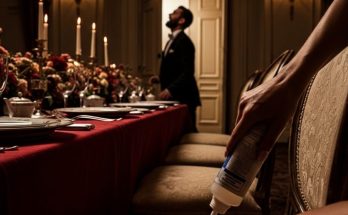
The Whitlock family dinner smelled like roasted chicken, garlic, and my mother’s lemon furniture polish. My father sat at the head of the table scrolling through game scores. My mother kept fussing with the serving spoons. My older sister Paige was angling her phone over her wineglass, trying to capture the candlelight. My brother Austin had already taken the best piece of chicken and was talking with his mouth half full about a waterfront listing he might close.
I waited until there was a small break in the noise.
“I got invited to an award ceremony next Friday,” I said.
Nobody looked up at first.
So I placed the envelope beside the potatoes.
“It’s the National Humanitarian Technology Awards. They gave me four guest seats. I’d be honored if you came.”
That word, honored, sounded too soft once it left my mouth. It landed in the middle of the table like a bird with a broken wing.
Austin reached for the envelope before anyone else could. He wiped his fingers on his napkin, though not carefully enough, and picked it up by one corner.
For one second, just one, I thought he might ask what the award was for.
He read the front, smirked, and flicked the card across the table.
It hit my cheek.
Not hard enough to bruise, but hard enough to sting. Hard enough that the corner scraped my skin before it dropped into my lap.
“You think we care about your stupid award?” he said.
Then he laughed.
Paige let out a little breath through her nose, the kind of laugh people make when they want to pretend they did not laugh. My mother sighed like I had made dinner uncomfortable on purpose.
“We already have Kraken tickets,” she said. “Your father got good seats.”
My father did not even lift his eyes. “Don’t expect everyone to rearrange their night over this, Mara.”
I looked down at the bent invitation in my lap. My name was still shining there, ridiculous and beautiful. Under it, in smaller letters, was the sentence none of them had bothered to read.
Broadcast live as part of the national ceremony.
My fingers did not shake when I picked it up. That surprised me. Somewhere inside me, something had gone very still.
“Understood,” I said.
Austin leaned back, pleased with himself. Paige started filming dessert. My mother asked if I could bring the salad bowl closer.
I stood, slid the invitation back into my purse, and walked out while they continued eating.
Outside, the cold Seattle rain smelled like wet asphalt and cedar. I sat in my car with both hands on the steering wheel, listening to the muffled sound of my own breathing.
Then my phone buzzed.
A notification from Austin’s story appeared at the top of my screen.
He had posted the whole thing.
And beneath the video, he had written: Big Award Energy.
Part 2
I did not watch the clip right away.
I drove home through rain that turned every red light into a blurry wound on the windshield. My cheek still tingled where the invitation had struck me. It was such a small pain, almost embarrassing in its smallness, but it kept pulling me back to the table. The flick of Austin’s wrist. My mother’s sigh. My father’s bored voice. Paige’s tiny laugh.
At my apartment, I locked the door and stood in the entryway without taking off my coat. My place was quiet in the way only a single woman’s apartment can be quiet after a family dinner goes bad. No television. No dishwasher running. No one asking where the scissors were or whether I could fix the Wi-Fi.
Just the hum of the refrigerator and rain ticking against the windows.
I pulled the invitation from my purse and smoothed it on the counter.
The corner was bent.
I did not fix it.
Instead, I opened Austin’s story.
The video started with his hand holding my invitation like it was a napkin someone had left behind.
“My sister really thinks we’re skipping Kraken tickets for some nerd award,” he said, laughing.
Then the camera jerked. The card flew. My face appeared for less than a second.
What stayed on-screen longer was everyone else.
My mother’s tired smile. My father’s indifference. Paige’s glossy wineglass. Austin’s grin.
The clip ended before I stood up.
He had trimmed away the part where I said “Understood.”
That bothered me more than I expected. Not because the word was powerful, but because he had erased the only part where I had any dignity.
I saved the video before he could delete it. I did not know why yet. I only knew my brother had taught me something useful over the years: when Austin embarrassed someone, he called it a joke; when someone embarrassed Austin, he called it betrayal.
I placed my phone face down and leaned against the counter.
For a long time, I thought about the first science fair I ever won. I was twelve. My project was about water filtration, and I had stayed up late building a tiny model out of plastic tubing, coffee filters, sand, charcoal, and a cracked aquarium pump my father said I could use because it was broken anyway.
When I brought home the blue ribbon, my mother said, “That’s nice, honey. Can you help Austin with his volcano? His is due tomorrow.”
Austin’s volcano erupted all over the cafeteria floor and got a standing ovation.
My ribbon ended up in a junk drawer.
That was how it worked in our family. Austin got celebrated for potential. Paige got praised for presentation. I got thanked when something stopped leaking, freezing, blinking, beeping, or breaking.
I became useful because useful people were harder to throw away.
By college, I had mistaken that for love.
I studied computer engineering because machines made more sense than people. Machines told you when something was wrong. They gave errors. They failed for reasons. Families could fail you for years and still expect you to smile in Christmas photos.
After graduation, I joined a public health technology company in Seattle. Not glamorous tech. Not the kind with rooftop parties and founders in designer sneakers. We built systems for emergencies. Routing networks. Hospital coordination tools. Weather-aware delivery paths for remote clinics.
My work lived behind screens, in maps and alerts and ugly little lines of code that had to function when roads closed, ferries stopped, or smoke covered half the state.
Most people never noticed systems like that unless they failed.
Dr. Naomi Kwan noticed.
She was my director, my mentor, and the first person who ever looked at my quietness without treating it like a defect.
“You’re not invisible,” she told me once during a three-in-the-morning test run. “You’re precise. There’s a difference.”
I believed her more than I believed my own family.
That night, after Austin posted the clip, I almost called her. I almost told her not to expect anyone in my family at the ceremony. But shame stopped me. Shame has a way of making you protect the people who hurt you, just so no one else sees how little they cared.
Then a text came from Dr. Kwan.
Don’t forget rehearsal tomorrow. Big week, Mara. Your work is going to be seen.
I stared at the word seen until my eyes burned.
Because my family had just made it very clear they would rather watch hockey than watch me.
And I had no idea that one week later, they would be trapped in an arena, forced to look up at my face on a screen bigger than their excuses.
Part 3
The week before the ceremony moved like a storm system on radar, quiet at the edges and violent in the center.
At work, everything was polished efficiency. The office smelled of coffee, printer toner, and the peppermint gum our operations lead chewed whenever he was nervous. Reporters emailed. Foundation staff called. Someone from communications asked if my family wanted to be listed in the guest program, and I said no so quickly she paused.
“No family guests?” she asked gently.
“They have other plans,” I said.
It was the cleanest version of the truth.
Dr. Kwan looked up from her tablet but did not interrupt. That was one of the things I loved about her. She knew when a silence needed protection.
The National Humanitarian Technology Award was not just a shiny plaque. It came after twelve years of work, three failed pilots, two near-bankrupt funding seasons, and more nights than I could count spent watching weather data crawl across monitors while emergency teams waited for routes.
The system we built helped move critical medical supplies when the usual roads were gone. Flooded highways. mountain closures, wildfire evacuation zones, island delays. I wrote the routing architecture that helped decide what could fly, where it could land, and how to reroute when conditions changed midair.
That sounds clean when summarized.
It was not clean.
It was sweating through my shirt at 2:14 a.m. because a clinic east of the Cascades had six minutes left in their margin and the landing zone lights had failed. It was arguing with a satellite map that insisted a gravel lot was clear when a nurse on the ground said there were power lines. It was rewriting a decision tree because “probably safe” was not good enough when people were waiting.
The award was not for being brilliant.
It was for being stubborn in the service of strangers.
On Wednesday, during rehearsal, I stood at the edge of the ballroom at the Seattle Convention Center and looked at the stage. Workers adjusted lights above us. A man in black taped down cables. Chairs stretched across the room in perfect rows, each one waiting for someone who had decided the evening was worth showing up for.
Four chairs near the front had little white cards marked Reserved.
I asked a staff member to remove my family’s names.
She hesitated. “Are you sure?”
“Yes.”
My voice sounded calm, but inside I felt like I was scraping a family photo off wet glass.
During rehearsal, the host mispronounced my last name once, apologized twice, and then asked me to practice walking to the podium.
The stage lights were hotter than I expected. They made the room disappear. For a second, I imagined my family sitting there. My mother dabbing her eyes. My father nodding with restrained pride. Paige capturing a tasteful angle. Austin pretending he had always known I was impressive.
The fantasy collapsed almost immediately.
In its place came the sound of the card hitting my cheek.
After rehearsal, Dr. Kwan walked with me through the lobby. Outside the glass doors, downtown Seattle glowed wet and silver. People hurried under umbrellas. A bus hissed at the curb.
“You seem far away,” she said.
“My family isn’t coming.”
“I figured.”
I gave a small laugh. “Was I that obvious?”
“No,” she said. “But empty chairs have a sound.”
That nearly broke me.
I looked away toward the street because I did not want to cry under a chandelier while a man from catering pushed a cart of folded napkins past us.
Dr. Kwan waited. She always waited like she had time for the truth.
“My brother threw the invitation at me,” I said. “At dinner.”
Her expression changed, not dramatically, but enough.
“Did it hurt?”
I knew she was not asking about my cheek.
“Yes,” I said.
She nodded once. “Then don’t spend your award night pretending it didn’t.”
By Friday afternoon, my dress hung from my closet door. Dark blue. Simple. Stronger than I felt. I pinned my hair back twice, then undid it, then pinned it again. My phone stayed silent in my purse, but I kept thinking it might buzz with a last-minute apology.
It did buzz.
Not an apology.
A text from Paige appeared.
Mom says don’t make tonight weird by posting sad stuff. We’re all allowed to have lives.
I read it twice, and something cold moved through me.
Then, beneath it, a second message appeared from an unknown number.
You don’t know what they’re planning at the game, do you?
Part 4
I stared at the unknown number until the screen went dark in my hand.
For a few seconds, my apartment seemed to shrink around me. The rain had stopped, but water still dripped from the balcony railing in slow, uneven taps. My dress hung on the closet door like a witness. My award speech lay on the coffee table, printed, folded, and already smudged at one corner from my thumb.
You don’t know what they’re planning at the game, do you?
I turned the phone over.
Then back again.
The sensible part of me said it was probably spam. Or some friend of Austin’s trying to rattle me. My brother had a talent for surrounding himself with men who confused cruelty with humor and called it “just messing around.”
But the message had not said “Austin.”
It had said they.
I typed, Who is this?
Three dots appeared, disappeared, appeared again.
Finally, the reply came.
Someone who thinks you should save screenshots.
I stood so still that the motion sensor light in my hallway clicked off.
Another message arrived.
Austin posted that clip because he thought it was funny. Paige is trying to make a post tonight if the award gets mentioned anywhere. Your dad asked if your company has investors at the ceremony. Your mom told people you “never really explained what the award was.”
My stomach tightened.
Who are you? I wrote again.
This time there was no answer.
I should have ignored it. I should have finished getting ready, called a car, and walked into the ceremony with my head up. Instead, I opened Paige’s social media.
There it was.
A photo of the Kraken arena from her seat, posted twenty minutes earlier. Blue lights. A sea of jerseys. My mother smiling in a team scarf. My father holding a drink. Austin making a peace sign like a college kid.
Caption: Family night. Sometimes you choose memories over obligations.
Obligations.
I read that word until it stopped looking like English.
Under the post, one of my cousins had commented, Isn’t Mara’s award tonight?
Paige had replied, Long story lol.
Long story.
It was always a long story when the truth made them look bad.
My phone buzzed again. This time, it was Dr. Kwan.
Car downstairs in five. You ready?
I looked at myself in the mirror. Dark blue dress. Hair pinned back. Makeup simple. Cheek healed. Eyes too bright.
No, I was not ready.
But I was done waiting to become ready.
At the convention center, everything smelled like lilies, expensive perfume, and rain steaming off wool coats. Photographers stood near a backdrop. Staff members wore headsets and moved with quiet urgency. Someone clipped a small microphone pack to the back of my dress for a pre-show interview, and the cold metal touched my skin.
Dr. Kwan met me near the ballroom entrance.
“You look like you’re going into court,” she said.
“Feels like it.”
“Good,” she said. “Then tell the truth if asked.”
Inside, the ballroom glowed gold. My team filled two rows, their faces turning toward me with real warmth. The reserved family chairs were gone. In their place sat nurses, engineers, two drone operators, and a rural clinic coordinator named Beth who had driven four hours to attend.
When Beth hugged me, her coat smelled faintly of pine and road coffee.
“You have no idea what your system did for us last winter,” she whispered.
I swallowed hard. “I have some idea.”
“No,” she said, pulling back to look me in the eye. “You have numbers. We have names.”
The ceremony began.
Speeches. Applause. Music swelling between categories. My hands stayed folded in my lap. I listened to other winners talk about clean water, disaster mapping, accessible classrooms. Good work. Real work. Work that made the world less cruel in small, stubborn ways.
Then a producer crouched near our row and whispered, “Ms. Whitlock, your segment is next after the live community feed.”
“Community feed?” I asked.
She smiled. “A few local venues are carrying the spotlight. Big screens, partner events, that sort of thing.”
My breath caught.
“What venues?”
She checked her tablet. “Climate Pledge Arena is one.”
The room tilted slightly.
Across town, my family was sitting inside that arena, under a screen large enough for thousands of strangers to see.
And for the first time that night, I understood the unknown text.
Someone had known the ceremony would find them.
The host stepped back to the microphone, smiled into the lights, and said my name.
Part 5
The walk to the stage felt longer than any road I had ever mapped.
The ballroom disappeared behind the brightness. I could hear applause, but it sounded filtered, like I was underwater. My shoes touched the stairs. One step. Another. My fingers brushed the edge of the podium, cool and smooth beneath the heat of the lights.
The host’s voice followed me.
“Mara Whitlock, senior systems architect for the Northwest Emergency Medical Response Network, is being honored tonight for her routing technology that has helped emergency teams deliver critical supplies to remote and blocked-off communities when every minute matters.”
Every minute matters.
That phrase had lived in my body for years.
It lived in the coffee stains on my desk, in the old hoodie I kept at the office, in the tiny scar on my finger from cutting myself opening server equipment at midnight. It lived in Beth’s tired smile. In Dr. Kwan’s steady hand. In the pilots who called every drone by nickname even though they claimed not to be sentimental.
It did not live at my parents’ dinner table.
A woman from the foundation handed me the award. It was heavier than I expected, clear glass and brushed metal, with my name etched into the base. Under the stage lights, it threw shards of white across my fingers.
I turned to the microphone.
I had written a careful speech. Polished. Grateful. Safe.
But the room had changed. Or maybe I had.
I looked toward my team. Dr. Kwan gave me the smallest nod.
So I folded the paper and set it down.
“This award has my name on it,” I began, “but the work behind it belongs to a lot of people who don’t usually get bright lights.”
My voice shook once, then steadied.
“It belongs to dispatchers who answer calls before sunrise. Nurses who turn parking lots into landing zones. Engineers who test failures no one will ever thank them for preventing. Rural doctors who make impossible decisions with calm voices because panic is a luxury they can’t afford.”
In the ballroom, people grew still.
I kept going.
“Most important systems are invisible until the moment they are needed. Then everyone asks why they weren’t stronger, faster, kinder, better prepared. I think the people who build those systems know something worth remembering. Quiet work is still work. Quiet people are still people. And being overlooked does not mean being unnecessary.”
The applause came like weather breaking.
Across town, I later learned, the arena lights had dimmed for intermission.
My family had been laughing over nachos and drinks when the giant screen switched from game highlights to the ceremony feed. At first, they barely watched. A public service segment. A feel-good interruption. The kind of thing people half-ignore while checking their phones.
Then my face appeared.
Mara Whitlock.
The name stretched across the screen over center ice.
Someone near my family said, “Wait. Whitlock? Like you?”
Austin stopped chewing.
Paige lowered her phone.
My mother leaned forward as if the screen had accused her personally.
My father stared with the frozen expression of a man realizing a room has noticed him for the wrong reason.
Then my speech filled the arena.
Quiet work is still work. Quiet people are still people.
I did not know they were watching while I spoke. I did not know strangers around them were turning, whispering, asking why they were at a hockey game instead of in that ballroom. I did not know Austin had cheese sauce on his thumb and no joke ready. I did not know Paige had already opened a blank post and then closed it.
All I knew was the applause in front of me and the award in my hands.
After the ceremony, people hugged me. A reporter asked for a quick comment. Beth cried openly and blamed it on allergies. Dr. Kwan told me I had done beautifully, then pretended not to notice when my eyes filled.
It was almost midnight when I finally checked my phone.
The screen lit up like an emergency alert.
Thirty-one missed calls.
Sixty-eight text messages.
Four voicemails.
The family group chat, silent for days, had exploded.
Austin: Call me.
Mom: Sweetheart, we are so proud of you.
Dad: We need to discuss how to handle this attention as a family.
Paige: I can make a beautiful post if you send me a photo with the award.
Then Austin again.
Do not make me look bad over one little card thing.
I stood in the hotel lobby, surrounded by flowers and applause and people who respected me, and read that message three times.
One little card thing.
That was when I realized the night was not over.
It had only just found its match.
Part 6
I did not answer anyone that night.
Not Austin. Not my mother. Not my father. Not Paige. Not even the cousins who suddenly wanted to know “what really happened” after acting blind for half my life.
I let the phone buzz inside my purse while I stood by the hotel windows and watched Seattle shine in the rain. The city looked clean from that high up, all silver streets and red taillights, but I knew better. Everything looked different when you were far enough away from it.
Dr. Kwan came to stand beside me with two paper cups of tea.
“Peppermint,” she said, handing one over. “You look like coffee would turn you into a lightning strike.”
I laughed because she was right, and because laughter felt strange after being hurt.
“My family saw it,” I said.
“At the arena?”
I turned to her. “You knew?”
“I knew the arena was carrying the feed. I didn’t know they would be there until you told me about the tickets.”
“Why didn’t you say anything?”
“Because tonight was yours,” she said. “Not a trap for them.”
That answer disarmed me.
For a second, I had wanted someone else to be the villain so I would not have to feel the full weight of my own family’s choices. But Dr. Kwan had not planned humiliation. She had not arranged revenge. She had simply helped build a stage for my work, and my family had chosen to sit somewhere they could not avoid seeing it.
The elevator doors opened behind us. A group of donors came out, talking brightly. One recognized me and congratulated me. I smiled, thanked him, and kept my award tucked against my side.
When I got home, the apartment was dark except for the soft blue glow from the microwave clock. I kicked off my heels and placed the award on the shelf by the window. It looked almost unreal there, between a chipped ceramic mug from college and a framed map of the first route our system ever completed.
Then I opened my phone.
The messages had worsened.
My mother had sent a paragraph beginning with, We were always proud of you, even if tonight got confusing.
Confusing.
My father wrote, We should present a united front. People will try to exploit this.
Paige sent three crying emojis, a childhood beach photo, and, I want to post something heartfelt before the narrative gets ugly.
Austin sent a voice memo.
I did not play it yet.
Instead, I opened social media.
The clip had spread.
Not just my award speech. Not just the arena reaction. Austin’s story.
Someone had saved it.
Someone had stitched the three moments together: Austin mocking my invitation at dinner, my face on the arena screen, my family sitting underneath it like defendants under evidence.
The caption read: Man throws sister’s award invite in her face, then realizes entire arena is watching her win.
I sat down hard on the edge of the couch.
The internet is not justice. I knew that. The internet is a hungry animal with ten thousand mouths, and sometimes it bites the right person by accident. I did not trust it. I did not want strangers deciding the shape of my pain.
But I also could not ignore the truth sitting there in pixels.
Austin had posted the first clip himself.
He had made my humiliation public because he thought it made him look funny.
Now the same public was laughing at him.
My phone rang.
Mom.
I watched her name pulse until the call stopped.
Then Dad.
Then Paige.
Then an unknown number.
Finally, Austin again from a number I did not recognize.
I answered without speaking.
“Mara?” His voice was sharp, breathless. “Finally. Listen, you need to say something.”
I closed my eyes.
He did not ask how I was.
He did not say congratulations.
He did not apologize.
He said, “People are taking this way out of context. My office has seen it. Clients have seen it. You need to comment that we’re good.”
We’re good.
Two words meant to erase a lifetime.
“Austin,” I said quietly.
“What?”
“We are not good.”
Silence.
Then he gave a short, ugly laugh. “Come on. You’re not really going to let people attack your own brother over one joke.”
My hand tightened around the phone.
A joke needs both people to laugh.
But I did not say that. Not yet.
Because a new text had just appeared from the unknown number.
Check Paige’s drafts before she posts. She’s not trying to help you.
Part 7
I hung up on Austin.
The silence afterward felt less like peace and more like standing in a house after the power goes out. Everything familiar was still there, but I had to move differently.
I opened Paige’s profile.
Nothing new.
Her last post was still the arena photo. Family night. Sometimes you choose memories over obligations.
Under it, the comments had turned sharp.
Is the obligation your sister winning a national award?
This aged badly.
Were you all really at the game while she accepted that award?
Paige had not replied to any of them. That alone told me she was panicking. My sister lived online the way some people lived in houses. She arranged her face for strangers before she arranged her thoughts for herself.
I clicked through her tagged posts.
Nothing.
Stories.
Nothing.
Then my email pinged.
Subject: Draft for approval.
From Paige.
For one wild second, I thought she had accidentally sent it to me.
Then I realized she had sent it on purpose because Paige did not understand boundaries. She understood branding.
Her message read: Mara, I know emotions are high. I drafted something that can calm everyone down and refocus on the positive. Please approve quickly.
Below was the post.
There was a photo of us as children at the beach. I remembered that day. I was eight, sunburned, holding a plastic bucket. Paige had spent the whole afternoon crying because saltwater ruined her hair ribbons. Austin had kicked over my sandcastle twice.
Her caption began:
From the moment we were little, I always knew my sister Mara was destined to change the world.
I made a sound that was almost a laugh.
She continued:
Our family has always believed in her brilliance, her heart, and her mission. Tonight, watching her receive national recognition reminded us that love is not about perfect schedules. It is about lifelong support.
I stopped reading for a second because my vision blurred.
Lifelong support.
I could smell that dinner table again. Garlic. polish. chicken skin. Austin’s laugh.
I forced myself to finish.
There was a line about “private family humor being misunderstood.” Another about “siblings teasing each other through every season.” Another about “standing proudly with Mara from day one.”
By the end, I felt strangely calm.
Not numb. Not broken. Calm in the way a surgeon must be calm before cutting something infected out.
I replied with one sentence.
Do not post this.
Three dots appeared in the email chat box, then vanished. My phone rang. Paige.
I declined.
She called again.
I declined again.
Then she texted.
You’re making this worse.
I typed: No. I’m refusing to make it false.
Her reply came fast.
Do you have any idea what this is doing to Mom?
There it was. The family’s oldest lever.
Mom is upset.
Dad is disappointed.
Austin is embarrassed.
Paige is stressed.
Mara, fix it.
I set the phone down and walked to the kitchen. The tea kettle sat on the stove from earlier, cold now. My apartment smelled faintly of mint and wet wool from my coat. I filled a glass with water and drank it slowly, feeling the chill travel down my throat.
Then I did something I should have done years ago.
I opened a new note on my phone and wrote down what happened at dinner.
No adjectives. No drama. No interpretation.
I brought the invitation.
Austin threw it at my face.
Mom said they had tickets.
Dad said not to expect them to rearrange their night.
Paige laughed.
I left.
Then I added:
Austin posted video mocking me.
Paige drafted false public statement.
Family requesting my participation to repair image.
Seeing it written plainly changed something. Pain likes to grow fog around itself. Facts cut windows into that fog.
At 1:18 a.m., I sent one message in the family group chat.
I appreciate the congratulations. I will not participate in any interview, post, article, statement, or social media content that presents my award as a family achievement. You do not have permission to use my name, photo, award, workplace, team, or story to repair your reputations. Do not contact my colleagues, my company, the foundation, or any hospital connected to the project. If anyone asks why you were not at the ceremony, tell them the truth: you were invited, you laughed at the invitation, Austin threw it at me, and you chose the hockey game.
For thirty seconds, nothing happened.
Then the typing bubbles appeared all at once.
Mom: How can you be this cruel?
Dad: You are embarrassing this family.
Paige: I was trying to HELP you.
Austin: You’re loving this, aren’t you?
I looked at Austin’s message and felt an old part of me finally stop begging to be understood.
Then another message came, but not from my family.
The unknown number again.
Good. Now watch your father.
Part 8
I slept for three hours and woke up with my phone under my pillow, hot from missed calls.
Outside, Seattle had settled into a pale gray morning. The kind of morning where the sky looked unfinished. My head ached. My mouth tasted like old tea. For a few seconds, before memory returned, I felt ordinary.
Then I saw the notifications.
My family was not the only one awake.
There were messages from coworkers, old classmates, distant relatives, local reporters, and strangers who had decided I was either inspiring, ungrateful, iconic, dramatic, brave, bitter, or all of those things before breakfast.
I ignored most of them.
But one email stopped me.
Subject: Inquiry Regarding Whitlock Family Statement.
From a reporter at a Seattle business journal.
My stomach dropped.
The email was polite. Too polite.
She wrote that my father, Grant Whitlock, had contacted her office offering “family insight” into my journey and the growing public conversation around “innovation, resilience, and the private support behind public success.”
Private support.
I read that phrase four times.
My father had not asked one question about my work in twelve years. Not what software I built. Not what communities we served. Not why the award mattered. But now that my name was attached to national attention, he had found language for support.
My phone rang.
Dad.
This time, I answered.
“Mara,” he said, using his boardroom voice. “We need to be practical.”
“No good morning?”
“This is serious.”
“I know.”
“You clearly do not. Reporters are circling. Your brother’s livelihood is being affected. Your mother is devastated. Paige is receiving disgusting comments. I have professional relationships to consider.”
I stood by the window and watched a man in a yellow raincoat walk his dog past the building. The dog stopped to sniff every planter like nothing in the world required urgency.
“What exactly do you want?” I asked.
“I want us to sit down today, agree on a family position, and move forward.”
“A family position?”
“Yes. Something gracious. Something mature. You can acknowledge there was a misunderstanding, but emphasize we’re close.”
“We’re not close.”
He exhaled sharply. “This is not the time for emotional exaggeration.”
My hand went cold around the phone.
That was my father’s gift. He could make pain sound like a clerical error.
“You contacted a reporter,” I said.
“I responded to an opportunity.”
“To say what?”
“To provide context.”
“What context?”
“That we raised you. That your discipline did not come from nowhere. That your family values shaped your success.”
For a moment, I could not speak.
Outside, the dog finally chose a planter.
Inside, I felt something old and heavy slide into place.
My father did not want forgiveness. He wanted ownership.
The award had not made him proud of me. It had made me useful in a new way.
“You do not get to claim my work,” I said.
His voice hardened. “Be careful, Mara.”
“Or what?”
Silence.
It was the first time I had ever asked him that.
He recovered quickly. “You’re acting like a child. Success has made you arrogant.”
“No,” I said. “Success made you interested.”
That landed.
He said my name once, low and warning.
I ended the call.
My hands shook afterward, but not from regret. From adrenaline. From finally touching a boundary and realizing it held.
I forwarded the reporter’s email to our communications director and copied Dr. Kwan. I included the exact sentence: No family member is authorized to speak on behalf of me, my team, or the project.
Dr. Kwan replied within five minutes.
Handled. Proud of you.
Two words I had needed from my parents my whole life, given freely by someone who owed me nothing.
By noon, the article Austin feared had gone live. It did not quote my father. It focused on the work, the award, and the viral contrast between the invitation clip and the arena broadcast.
The comments were brutal.
Not to me.
To Austin.
By two, his brokerage had removed his face from a community trust campaign. By three, a client had requested another agent. By four, Paige had deleted her “family night” post.
At 4:17, my mother sent a voice message.
I did not play it.
At 4:19, the unknown number texted again.
You should know who I am before they tell you I’m lying.
Then came a name I had not heard in years.
Lena Morris.
Austin’s ex-fiancée.
Part 9
Lena Morris had disappeared from our family like someone closing a door softly in the middle of the night.
She and Austin were engaged when I was twenty-seven. She had dark curly hair, a laugh that started small and then surprised you, and a habit of bringing homemade brownies to every Whitlock event even though my mother always pretended desserts should match the season.
I liked Lena.
That was probably why my family made sure I never knew the full story.
One month she was choosing flowers. The next, Austin was telling everyone she had “trust issues” and “couldn’t handle a real relationship.” My mother packed away the wedding planning binder. Paige posted a quote about releasing negative energy. My father said Austin was better off.
I had asked Austin once if Lena was okay.
He said, “Don’t make it weird, Mara.”
So I did what I had been trained to do.
I let it go.
Now her name glowed on my screen like a match in a dark room.
My first instinct was suspicion. Not because of Lena, but because the past is never as simple as memory makes it. She might hate Austin. She might want revenge. She might see my family’s public shame as an open door.
Still, she had warned me about Paige. She had warned me about my father.
And she had been right.
I texted: Why are you helping me?
The reply came several minutes later.
Because I watched that dinner clip and recognized the room.
Not the furniture.
The room.
My throat tightened.
I sat at my kitchen table, where morning coffee had gone cold in the mug. The apartment smelled faintly of toast I had burned and never eaten. I typed carefully.
What happened with you and Austin?
Her answer did not come as a dramatic confession. It came in fragments, the way people speak when they have spent years compressing a wound into something socially acceptable.
Austin had not cheated, not in the cinematic way people expect. He had done something quieter and more exhausting. He had mocked her ambitions in public, then called her sensitive. He had borrowed her ideas for client pitches. He had told his friends she was “intense” whenever she asked for respect. When she got promoted, he sulked for three days and then proposed in front of both families, making her promotion dinner about their engagement.
My mother had cried happy tears.
Paige had posted the ring before Lena called her own sister.
My father had toasted Austin for “knowing when to secure a good woman.”
Six months later, Lena left.
Austin told everyone she had broken his heart.
“What made you finally go?” I asked.
Her reply took longer.
He threw a folder at me during an argument. It hit my shoulder. He laughed and said, “Don’t look like that. It barely touched you.”
I stopped breathing for a second.
My cheek remembered the invitation.
Lena wrote again.
When I saw him throw that card, I knew he hadn’t changed. When I saw your family react, I knew they hadn’t either.
I pressed my palm against the table.
There was a comfort in being believed that almost hurt more than being dismissed.
Lena asked if I wanted the screenshots she had from years ago. Messages where Austin admitted mocking her job. Messages where Paige told Lena not to “make Austin look abusive over tone.” A message from my mother saying men needed patience when strong women made them insecure.
I did not know what I would do with them.
But I said yes.
They arrived in a zip file I did not open immediately.
Instead, I sat there listening to the hum of the refrigerator and the faint traffic below my window. A bus hissed at the stop. Someone laughed on the sidewalk. Life outside kept moving with offensive normalcy.
Then my phone rang.
Austin.
Blocked number again.
I let it go.
A text followed.
Lena is crazy. Whatever she tells you is a lie.
I stared at the timing.
He knew.
Either Paige had told him. Or my father. Or someone was watching Lena too.
Another text arrived.
Do not let her poison you against your own family.
For years, my family had called me dramatic whenever I named a pattern. Now, the pattern had a second witness.
I opened Lena’s file.
The first screenshot was a message from Austin, dated seven years earlier.
You should be grateful I even showed up. Nobody cares about your little work thing.
My skin went cold.
Because those words were almost the same as the ones he had thrown at me.
And suddenly I understood the real secret my family had protected all along: Austin had never been joking. He had been practicing.
Part 10
I read Lena’s screenshots until the afternoon light faded from gray to blue.
By the end, I felt less shocked than tired. That was the worst part. The evidence did not reveal a monster wearing a mask. It revealed a man everyone had chosen to excuse because excusing him was easier than confronting him.
Austin did not explode all at once.
He chipped.
A comment here. A joke there. A little humiliation disguised as teasing. A warning that you were making him look bad. A demand that you help clean up the mess he made.
I knew that rhythm.
I had danced to it my whole life.
Lena sent one final message.
You don’t have to use any of this. I just wanted you to know you’re not imagining things.
I wrote back: Thank you.
Then I added something I had never said to her years ago.
I’m sorry we didn’t protect you.
Her response came quickly.
You were surviving too.
I put the phone down and cried then.
Not loudly. Not beautifully. Just quiet tears at my kitchen table while the city outside turned on its evening lights. I cried for Lena. For myself. For every woman who had been told to be patient with a man who was old enough to be kind.
The next morning, I met Dr. Kwan at a small cafe near the office.
It smelled like espresso, cinnamon, and wet coats. The front window was fogged from the heat inside. Dr. Kwan sat in the corner with her laptop closed, which told me she was there as my friend, not my director.
I told her about Lena. Not every detail. Enough.
She listened without interrupting.
When I finished, she said, “What do you want?”
It was such a simple question that I almost could not answer.
My family always asked what I was going to do for them. Reporters asked what I wanted to say. Strangers asked whether I would forgive. But Dr. Kwan asked what I wanted.
I watched steam rise from my coffee.
“I don’t want revenge,” I said slowly. “Not really. I don’t want to spend my life managing their consequences. I just don’t want them near my work. Or my name. Or my peace.”
“That’s clear.”
“It doesn’t feel clear.”
“Because you were taught that clarity is cruelty when it disappoints someone.”
I looked at her.
She took a sip of tea. “It isn’t.”
At work, communications had already redirected media requests. The foundation issued a statement focused entirely on the emergency response network and its partner communities. My family was not mentioned. Neither was the viral clip.
That should have calmed things.
It did not.
Austin posted again.
This time, it was a video.
He stood in what looked like his office, wearing a navy blazer and the wounded expression of a man who had practiced humility in the mirror. His voice was soft.
“Hey everyone. I’ve seen the conversation going around about my sister and me. Families are complicated. Humor doesn’t always translate online. I love my sister, and I’m proud of her. I hope people can give us privacy while we work through this as a family.”
He looked sincere.
If I had not been raised beside him, I might have believed it.
Then he made one mistake.
He said, “Mara knows my heart.”
No, I thought.
I know your pattern.
The video got sympathy at first. Some people said the internet had gone too far. Others said siblings fight. A few accused me of enjoying attention because I had not publicly defended him.
Then Lena posted.
Not the whole file. Not private wounds for entertainment. Just one screenshot from years ago with the date visible and names clear.
Nobody cares about your little work thing.
Her caption was one sentence.
He said it to me too.
The tide shifted again.
My family lost their minds.
My mother called Lena bitter. Paige called her opportunistic. My father threatened legal action in language vague enough to sound powerful and empty enough to be useless.
Austin sent me seventeen messages from new numbers.
I ignored them all until one came through that made my blood slow.
You think you’re safe because everyone likes you right now. But I know things about you too.
I stared at the screen, waiting for fear.
Instead, I felt something sharper.
Relief.
Because for the first time, my brother had stopped pretending this was love.
And I knew exactly what I had to do next.
Part 11
I did not respond to Austin’s threat.
Responding would have given him what he wanted: proof that he could still reach through the walls I was building and move something inside me.
Instead, I took screenshots. Every new number. Every message. Every call log. I saved them in a folder and sent copies to myself, to our company’s legal contact, and to Dr. Kwan.
Then I blocked him again.
The next hours were strangely ordinary. I fixed a bug in a landing-zone alert system. I reviewed a route failure report. I ate a vending machine granola bar that tasted like sweet cardboard. Outside the office windows, Seattle dragged itself through another wet afternoon.
Work helped. Not because it erased pain, but because it reminded me I existed outside my family’s opinion.
At 5:40, as I packed my bag, the receptionist called my desk.
“Mara, there’s someone here asking for you.”
My first thought was Austin.
My body reacted before my mind did. Shoulders tight. Heart fast. Fingers cold.
“Who?”
“A woman. Carol Whitlock.”
My mother.
For a moment, I considered leaving through the back stairwell. Then anger moved through me, clean and bright.
My mother had ignored my invitation. She had watched Austin throw it. She had tried to rewrite the story. And now she had come to my workplace because I would not answer her calls.
I walked to the lobby.
She stood near the glass doors, wearing a camel coat and pearls, her hair shaped into the careful waves she used for church luncheons and difficult conversations. Her eyes were red, but her lipstick was perfect.
“Mara,” she said, as if I had been lost.
“Mom.”
She glanced at the receptionist, then at the two engineers walking past. Her voice lowered.
“Can we talk somewhere private?”
“No.”
Her face tightened.
“I am your mother.”
“I know.”
That seemed to hurt her more than if I had shouted.
She stepped closer. Her perfume reached me first, powdery and floral, the same scent that used to linger in the hallway when she kissed Austin goodnight and passed my room without stopping.
“I did not raise you to be this cold,” she said.
I almost laughed.
“You raised me to be useful. Cold is new.”
Her mouth opened, then closed.
For one second, I saw panic behind her eyes. Not grief. Not remorse. Panic that the old tools were not working.
“I made mistakes,” she said finally. “But you’re punishing everyone.”
“I’m protecting myself.”
“From your family?”
“Yes.”
The word landed between us with a sound I could almost hear.
She looked toward the lobby windows. Rain striped the glass behind her. Her reflection seemed thinner there, older.
“I know Austin went too far,” she whispered.
I waited.
“But he is your brother.”
There it was.
The bridge she expected me to cross while he burned it from the other side.
“And I am your daughter,” I said.
Her eyes filled. “Of course you are.”
“No. Not of course. Not at that table. Not when he threw the invitation. Not when you chose the game. Not when you asked me to lie afterward. You remembered I was your daughter when strangers started asking why you weren’t there.”
She flinched.
For a moment, I thought she might finally say it. A real apology. Something without excuses. Something plain enough to hold.
Instead, she said, “What do you want me to do? Choose between my children?”
The old Mara would have softened.
The old Mara would have said no, of course not, I don’t want to cause problems.
But the new Mara heard the trick.
“You already chose,” I said. “I just stopped pretending you didn’t.”
She put one hand to her chest.
“You don’t mean that.”
“I do.”
“You’ll regret this when I’m gone.”
The sentence was so cruel, so polished by generations of mothers before her, that the last tender thread inside me snapped without drama.
“No,” I said. “I’ll regret how long I stayed.”
She stared at me as if I had become someone she could not recognize.
Maybe I had.
Then the elevator behind me opened, and Dr. Kwan stepped into the lobby. She took in my mother, my face, the distance between us.
“Everything all right?” she asked.
My mother straightened instantly, trying to become respectable in front of a stranger.
I looked at Dr. Kwan, then back at my mother.
“Yes,” I said. “My mother was just leaving.”
And for the first time in my life, my mother did not know how to make me follow her.
Part 12
My mother left without hugging me.
That detail stayed with me longer than it should have.
She paused at the glass doors as if waiting for me to call her back, and when I did not, she stepped into the rain. Her coat darkened at the shoulders before she opened her umbrella. I watched her through the lobby window until she blended into the gray sidewalk crowd.
Dr. Kwan stood beside me without speaking.
Finally, I said, “I feel terrible.”
“That doesn’t mean you did wrong.”
“I know.”
But knowing and feeling are different countries.
That night, I went home and found a box outside my apartment door.
No return address.
For one foolish second, I thought it might be from my mother. Old photos. Some symbolic object. Maybe the science fair ribbon she had probably thrown away years ago.
It was not.
Inside was my invitation.
Not the one I had kept.
A copy.
Printed from a photo, enlarged and folded in half. Across it, in black marker, someone had written:
You wanted attention. Enjoy it.
My hands went very still.
There are moments when fear enters a room quietly. It does not kick down the door. It stands behind you and lets you feel the temperature change.
I took photos of the box. The hallway. The note. The label. Then I called building security.
By midnight, I had filed a report. By morning, our company had added security instructions. By noon, Austin denied sending it in a text to my father, who forwarded the denial to me as if that settled anything.
It did not.
The building camera showed a delivery courier, not Austin. The courier had picked up the box from a drop location. Cash paid. No useful name.
The threat could have been from a stranger online.
It could have been from Austin.
It could have been from someone trying to scare me into silence because my refusal had become inconvenient.
That uncertainty should have made me smaller.
Instead, it clarified the situation.
This was not family conflict anymore. It was harassment. And I was done treating danger like drama just because we shared DNA.
I sent one final email to my immediate family.
Do not contact me directly, come to my home, come to my workplace, contact my colleagues, or send anything to my address. Any further contact will be documented. I am not participating in public or private repair of this relationship. I wish you accountability and growth, but I will not be part of it.
My father replied within two minutes.
This is excessive.
I did not answer.
My mother replied two hours later.
I hope one day you understand what you are doing to us.
I did not answer.
Paige sent a quote graphic about forgiveness.
I blocked her email.
Austin wrote from a new number.
You’re dead to me.
I read it once.
Then I blocked him too.
For three weeks, nothing happened.
No calls. No packages. No surprise visits. No family chat. Silence opened around me, wide and unfamiliar.
At first, I did not trust it.
I kept checking locks. Kept saving screenshots. Kept expecting guilt to arrive dressed as duty.
But slowly, other things filled the space.
Work.
Sleep.
Real meals.
Saturday mornings at the farmers market where apples smelled like wet leaves and cinnamon bread came warm in paper bags.
Coffee with Lena.
That surprised me most.
We met at a small place in Ballard with scratched wooden tables and too many plants. She looked older than I remembered, but not in a sad way. More like someone who had stopped spending energy pretending not to be tired.
“I wondered if seeing me would be weird,” she said.
“It is,” I admitted.
She laughed. “Fair.”
We talked for two hours. About Austin, yes, but also about work, books, bad dates, rent, Seattle rain, and the strange grief of being free from people who should have loved you better.
When we left, she hugged me.
Not like family.
Better.
Like someone asking permission with her arms.
A month later, the foundation invited me to speak at a rural health conference in Spokane. I almost said no. Then Beth emailed me.
You should come. People here know your work without the viral mess. That might feel good.
She was right.
The conference smelled like hotel carpet, coffee urns, and snow melting off boots. After my talk, a man approached me near the back of the room. He was tall, with tired eyes and a paramedic jacket folded over one arm.
“I’m Eli Mercer,” he said. “We spoke once during the Stevens Pass closure. You talked me through moving a landing zone.”
I remembered the case. Bad weather. Failed lights. A calm male voice on the radio saying, We can make this work if you can give me a safer angle.
“You were the one with the flashlight grid,” I said.
He smiled. “You remembered.”
“I remember problems.”
“Good,” he said. “I remember people who solve them.”
For the first time in months, warmth rose in me without warning.
Then he looked past me, and his expression changed.
I turned.
My father stood at the conference entrance, wearing a suit and holding a visitor badge.
And he was smiling like he had been invited.
Part 13
My first thought was not fear.
It was exhaustion.
The kind that settles deep in the bones when someone proves they would rather climb through a window than respect a closed door.
My father spotted me and lifted one hand, casual and confident, like we had planned to meet beside the registration table between sessions. He wore his best charcoal suit. His hair was trimmed. His expression had that public warmth he used with bankers, neighbors, and waiters he wanted to impress.
“Mara,” he called.
Eli glanced at me. “You okay?”
“No,” I said. “But I will be.”
I walked toward my father before he could reach me. That mattered. I did not want him entering my space again.
“Why are you here?” I asked.
His smile flickered. “I came to support you.”
“No.”
He lowered his voice. “Don’t do this in public.”
“You chose public.”
A woman at the registration desk looked up. My father noticed and adjusted his face.
“I had business in Spokane,” he said smoothly. “When I heard you were speaking, I thought enough time had passed.”
“Enough time for what?”
“For you to calm down.”
There it was.
Not heal. Not be heard. Not decide.
Calm down.
I felt the last of my hope for him leave quietly, like a guest slipping out before dessert.
“You need to leave,” I said.
His jaw tightened. “You cannot ban your father from public events.”
“This is a professional conference. You are not registered for any relevant role. You were told not to contact me. Leave.”
“I’m trying to repair this family.”
“No. You’re trying to repair access.”
His eyes hardened.
For one second, the polished man vanished, and I saw the father from the dinner table. The one who had looked at my invitation and measured it only by whether it inconvenienced him.
“You think these people care about you?” he said softly. “They care about the story. Fame fades, Mara. Family is what remains.”
I looked around.
Beth was across the room speaking with a nurse. Dr. Kwan stood near the stage reviewing notes. Eli waited a few steps behind me, not interfering, just present. People who knew my work. People who had shown up before my name became useful.
Then I looked back at my father.
“No,” I said. “What remains is what was real.”
Security arrived two minutes later.
I had not called them. Eli had.
My father’s face went red when the conference coordinator asked to see his registration. He tried to explain. He used words like misunderstanding, daughter, family matter, support. The coordinator listened politely and then escorted him out.
He did not look at me as he left.
Good.
That evening, after the conference ended, I stood outside under a cold violet sky. Snow lined the curb in dirty ridges. My breath came out white. Eli brought me coffee from the hotel lobby and handed it over without asking too many questions.
“Your dad?” he said.
“Yes.”
“Complicated?”
“No,” I said, surprising myself. “Not anymore.”
He nodded.
We walked two blocks to a diner with neon signs in the windows and cracked red vinyl booths. I ordered fries and a turkey sandwich I barely touched. He told me about emergency calls in mountain towns, about his niece learning violin badly but proudly, about the time he dropped his radio into a snowbank and spent twenty minutes arguing with dispatch through someone else’s headset.
He made me laugh.
Not because he tried hard.
Because he listened easily.
At the end of the night, outside the diner, he said, “I’d like to see you again. Not as the award woman. Not as the viral woman. Just you.”
The old version of me would have panicked at the kindness.
The new version of me took a breath.
“I’d like that,” I said.
We did not become a love story overnight. Real life is not that tidy. But he called when he said he would. He asked about my day and remembered the answers. When I said I needed slow, he did not make slow feel like rejection.
That was how I learned peace could be romantic too.
Six months after the award, Austin posted a public apology. It was better than his first attempt. Less polished. More specific. He admitted throwing the invitation. He admitted mocking me. He admitted asking me to protect his image before asking if I was hurt.
People praised him for growth.
Maybe he deserved some of that.
But I did not respond.
My mother wrote me a letter. Five pages. Some apology, some guilt, some memory, some blame folded between softer sentences. She said she missed her daughter.
I placed it in a drawer.
My father never apologized. Paige sent a holiday card with a photo of the family dog wearing antlers and a note that said, Life is short.
I recycled it.
The award still sits on my shelf by the window. Beside it is the original invitation, the one Austin threw at me. The corner is still bent. I keep it that way on purpose.
Not because I want to remember humiliation.
Because I want to remember evidence.
Evidence that they were invited.
Evidence that they chose not to come.
Evidence that I picked up what they threw away and carried it into a room full of people who knew its worth.
I did not forgive them.
I did not return to Sunday dinners. I did not let my father use my name. I did not let Paige turn pain into content. I did not let Austin’s late apology become a key to a door I had finally locked.
Some people think that is bitterness.
They are wrong.
Bitterness would have been staying at that table forever, waiting for people with full plates to notice I was starving.
I built a better life instead.
A life with quiet mornings, meaningful work, friends who show up without cameras, students who remind me why dignity matters, and a man who once stood beside me without needing to be asked.
The last time I saw my family was in a photograph someone sent me from a charity dinner. Austin stood between my parents, smiling carefully. Paige leaned in from the side, perfect as ever. They looked united.
They looked fine.
For once, I did not wonder if they missed me.
I closed the photo, set my phone down, and turned toward the window where morning light was touching the award, the bent invitation, and the life I had chosen.
The people who only loved me after the spotlight were not the reason I shined.
They were proof I had been glowing long before they looked.